
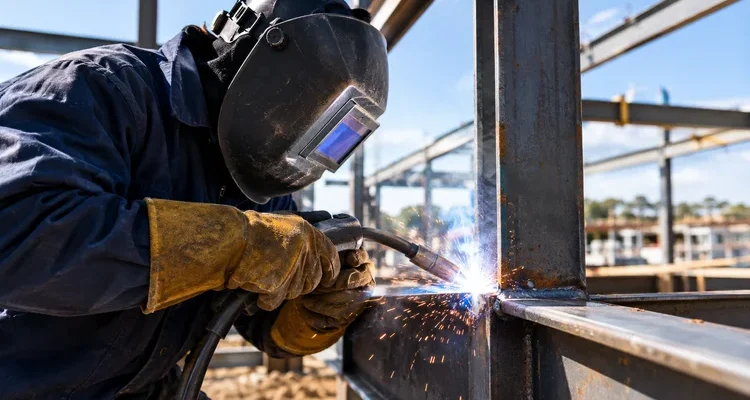
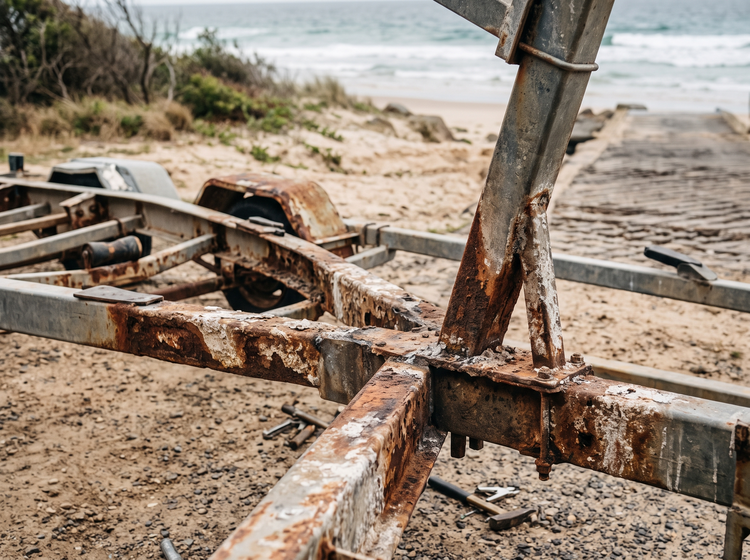
Saltwater is one of the most aggressive environments that steel can face. For anyone maintaining boats, trailers, marine equipment, coastal gates, fences, structural frames or fabricated metalwork along the Queensland coast, corrosion is not an abstract risk — it is something that needs to be actively managed as part of keeping steel structures safe and serviceable.
The challenge is not limited to structures that are submerged. Salt-laden air, coastal humidity and wind-driven spray can cause significant deterioration in welded metal that has never been near the waterline. And because corrosion builds gradually, the damage is often already well progressed by the time it becomes visible from the outside.
Understanding how saltwater affects welded structures, where corrosion tends to start, and how to respond when damage is identified makes a practical difference to how long steel lasts and what it costs to maintain. Saltwater damage to metal does not automatically mean a structure needs to be replaced — the right response depends on the type and extent of the damage, the condition of the surrounding steel, and what the structure is actually required to do.
Professional inspection and welding services can help determine whether a damaged structure can be safely repaired or whether replacement is the more practical option.
How Saltwater Affects Welded Metal Structures
Saltwater corrosion is a progressive problem. It rarely announces itself dramatically — it typically begins at surface level, works its way under protective coatings, and if not addressed, eventually compromises the structural integrity of the steel.
Welded metal structures are worth understanding specifically in this context because welds and the surrounding base metal can behave differently under corrosive conditions compared to plain flat steel. The weld area, the heat-affected zone, and any surface irregularities left from fabrication can all influence where corrosion starts and how quickly it progresses.
For properties and businesses along coastal Queensland — particularly in the Hervey Bay and Fraser Coast area — this is not a theoretical concern. Boat trailers, marine equipment, structural steel on coastal properties, gates, handrails, farm machinery and a wide range of other fabricated metalwork are all exposed to varying degrees of salt and moisture on a day-to-day basis.
The appropriate response to corrosion is not always obvious from a surface inspection. A weld that looks intact may be surrounded by thinning parent metal. A coat of paint that appears mostly sound may be concealing active corrosion underneath. Getting an accurate picture of what is actually happening with the steel is what determines whether repair is the right path forward, and how that repair should be approached.
Why Is Saltwater So Corrosive to Metal?
How Salt and Water Accelerate Corrosion
Corrosion in steel is driven by an electrochemical reaction. When the iron in steel is exposed to both oxygen and moisture, a reaction occurs that gradually converts the surface metal into iron oxide — rust. This process continues as long as the conditions that support it remain in place.
What makes saltwater significantly more corrosive than fresh water is its conductivity. Dissolved salts — predominantly sodium chloride — make water a far more effective electrolyte, allowing the electrochemical corrosion reaction to proceed more readily and at a faster rate than it would in ordinary rainwater.
Repeated wetting and drying cycles compound the problem. As water evaporates from a steel surface, salt is left behind as a deposit. These salt residues are hygroscopic — they draw moisture from the surrounding air — which means they can continue driving corrosion even when the structure is no longer directly in contact with the sea. A boat trailer or a coastal gate post does not need to be actively wet to keep corroding if salt deposits have been left to build up on the surface.
Why Coastal Environments Increase Corrosion Risk
Direct immersion is the most severe form of saltwater exposure, but it is far from the only one that matters. Salt-laden air, coastal humidity and wind-driven spray can all deliver enough salt to a steel surface to maintain a persistently corrosive environment — even for structures that are well back from the waterline.
Properties near beaches, boat ramps, marinas and estuaries are exposed to this kind of environment as a matter of course. The closer a structure is to the water, and the more frequently salt-laden air passes over it, the more aggressive the corrosion conditions become.
Hervey Bay sits on the edge of the Great Sandy Strait, and for anyone maintaining steel across the wider Fraser Coast — whether at the water’s edge, on coastal properties, or in areas regularly exposed to onshore winds — saltwater corrosion on steel is an ongoing management issue rather than an occasional concern.
Freshwater and Saltwater Exposure Are Not the Same
Ordinary rainwater will cause steel to corrode, but the process is comparatively slow under normal conditions. Introduce salt and the same corrosion mechanisms operate at a meaningfully faster rate.
It is also worth noting that structures exposed to both freshwater and saltwater can still experience significant deterioration. A trailer that is regularly launched into saltwater does not benefit from subsequent rainfall in the way that might be assumed — salt penetrates into surface irregularities and continues driving corrosion. Salt residues persist through rain events unless the structure is properly rinsed and dried. Freshwater rinsing after each saltwater exposure, rather than relying on rain alone, makes a genuine difference.
Why Welded Metal Structures Can Be Vulnerable to Saltwater Corrosion
Welds Can Create Areas Where Corrosion Begins
A weld is a joint formed by fusing base metal with heat, sometimes with the addition of filler material. The weld bead itself, the surrounding base metal and the heat-affected zone can all have slightly different surface characteristics and microstructures compared to the undisturbed parent steel.
Surface irregularities, weld spatter, crevices around the weld toe and any residual contamination can retain moisture and salt deposits — making these areas potential starting points for corrosion around welds. It is important to understand, though, that rust appearing at or near a weld does not automatically mean the weld is defective. Corrosion can initiate at a weld that is structurally sound, and distinguishing between cosmetic surface corrosion and a genuinely compromised joint requires proper assessment.
The Heat-Affected Zone and Corrosion
The heat-affected zone (HAZ) is the area of base metal that is not melted during welding but is subjected to elevated temperatures that alter its microstructure. The degree of change in the HAZ depends on the welding process, the heat input applied, the material type and thickness, and the cooling rate after welding.
These microstructural changes can influence how the metal responds to corrosion over time. The relationship between welding and long-term corrosion performance is manageable with appropriate material selection, controlled welding procedures, and proper surface protection after fabrication. It becomes a more significant issue when those factors are not considered, or when protective coatings are allowed to deteriorate without maintenance.
Weld Profiles and Crevices Can Trap Moisture
The physical geometry of a welded structure has a direct bearing on corrosion management. Tight gaps between overlapping sections, hollow members with unsealed or poorly sealed ends, enclosed box sections, and areas that are difficult to access for cleaning or inspection are all locations where water and salt can become trapped.
Moisture that sits against steel in a confined, poorly ventilated space will drive localised corrosion more aggressively than moisture on a well-drained, open surface. Designing and fabricating structures so that water drains away rather than pooling — and so that surfaces can be inspected and treated — is a practical part of extending service life in coastal and marine environments.
Common Types of Corrosion Found on Saltwater-Exposed Welded Structures
Surface Corrosion
Surface corrosion — general rusting and oxidation across exposed steel — is usually the earliest visible sign that a protective coating has begun to fail or that bare steel has been left without adequate protection. Discolouration, reddish-brown staining and localised rust spots are typical early indicators.
Surface rust should not be dismissed as merely cosmetic. It provides a pathway for more aggressive corrosion to develop beneath, and once corrosion has established itself under a coating it can spread laterally without being visible from the outside. Addressing surface corrosion while it is still superficial is consistently less work and less cost than dealing with it after it has progressed further into the steel.
Pitting Corrosion
Pitting is a localised form of corrosion that creates small depressions in the surface of the steel. These pits can penetrate significantly into the thickness of the material while appearing relatively minor when viewed from above, which makes pitting more concerning than widespread surface rust in many structural situations.
A piece of steel with moderate surface rust may retain most of its original cross-section. A piece with significant pitting may look reasonable from a distance but have materially reduced wall thickness at individual pit locations. In structural members, brackets and load-bearing connections, this distinction matters considerably. Heavily pitted steel should be assessed before any welding repair is attempted.
Crevice Corrosion
Crevice corrosion develops in narrow gaps where moisture and salt become trapped — between overlapping plates, beneath brackets, inside bolted connections, in enclosed sections and at similar locations. The confined environment restricts oxygen access and creates conditions where corrosion tends to concentrate and become more aggressive.
These areas can be difficult to inspect thoroughly and even more difficult to clean properly, which is part of what makes them a persistent challenge in coastal fabrications. On a boat trailer, a coastal gate frame or any structure with overlapping sections, crevice corrosion is typically found first at internal corners and overlapping joints — exactly the areas that are hardest to see without deliberate inspection.
Galvanic Corrosion
When two dissimilar metals are in electrical contact in the presence of an electrolyte — such as saltwater — the less noble metal will corrode preferentially. This is galvanic corrosion, and saltwater is a more effective electrolyte than freshwater, which means the process can be significantly more aggressive in marine environments.
Stainless steel fittings on a mild steel frame, aluminium components in contact with steel, or dissimilar fasteners in structural connections can all contribute to galvanic corrosion if the combination is not managed appropriately. Material selection and, where necessary, isolation of dissimilar metals are the relevant controls. The choice between aluminium vs steel welding for marine applications involves galvanic compatibility as one of the key considerations, particularly in saltwater environments.
Corrosion Inside Hollow Metal Sections
Hollow structural sections — square, rectangular or round tubing — present a particular challenge because their internal surfaces cannot be inspected or treated in the same way as external faces.
Water enters hollow sections through open ends, cracked welds, drainage holes that allow moisture in without letting it fully drain, and any location where the section has been breached. Once inside, it creates a persistently damp environment where internal corrosion can progress without any external indication until the section wall has already lost significant thickness.
By the time swelling, distortion or visible holes appear on the outer face of a hollow section, the internal deterioration is typically already substantial. This is one of the reasons why structures that appear solid from the outside can sometimes be further compromised than they seem.
How Saltwater Corrosion Can Affect Weld Integrity
Loss of Metal Around the Weld
Welded steel corrosion does not only affect appearance — it can progressively reduce the effective cross-section of the parent metal adjacent to a weld. Even where the weld bead itself remains largely intact, thinning of the surrounding steel reduces the load-carrying capacity of the joint as a whole.
In practice, this means the parent metal can become the weak point even when the weld bead looks externally sound. Assessing the condition of the steel on both sides of a joint — not just the weld itself — is an essential part of evaluating whether a welded connection is still structurally adequate.
Cracking and Stress Concentration
Corrosion pits, areas of material loss and surface irregularities all act as stress concentrations — points where stress is amplified when the structure is loaded or subjected to vibration. In components that experience repeated loading or cyclical forces, stress concentrations created by corrosion can initiate fatigue cracks even at loads that would be unremarkable in undamaged steel.
When corrosion is present alongside visible cracking at or near structural welds, the combination warrants prompt assessment. Whether cracked steel can be safely repaired depends on factors including the location and extent of the crack, the condition of the surrounding steel, and the loads the component is required to carry.
Corrosion Can Hide Structural Damage
Painted or coated structures can sometimes conceal the extent of corrosion beneath the surface. A coating that looks mostly intact from a distance may have separated from the steel underneath, allowing corrosion to spread laterally while remaining hidden under apparently sound paint.
Warning signs include bubbling or blistered paint, localised peeling or flaking, rust staining bleeding through a coating, and areas where the metal surface appears to have shifted or distorted. When a coating shows these signs of failure, investigating what is happening underneath — rather than simply applying a fresh coat over the top — is the appropriate response.
When Corrosion Makes Welding More Difficult
Welding directly onto rusted, pitted or contaminated steel does not produce a reliable repair. The weld metal becomes contaminated, porosity develops, and fusion with the base metal is compromised. The result may look like a weld, but it will not perform as one — particularly under structural loads or vibration.
Removing corrosion, preparing the base metal to a clean and sound condition, and assessing whether the remaining steel is adequate for the repair are all prerequisites for welding work that will actually hold. Skipping preparation steps to save time is a false economy on structural components, and the consequences of weld failure in a load-bearing application are not trivial.
Which Welded Metal Structures Are Most at Risk?
Boat Trailers and Marine Trailers
Boat trailers are among the most consistently exposed steel structures in any coastal area. Every time a trailer is launched, the frame, crossmembers, drawbar, brackets and suspension components are submerged in saltwater. Even trailers with galvanised steel coatings accumulate corrosion damage at welds, connection points and any location where the coating has been damaged by impact or abrasion.
Rinsing a trailer with fresh water after each launch reduces ongoing salt exposure but does not eliminate the risk entirely — particularly around welds and in overlapping sections where salt lodges in surface irregularities. Getting a boat trailer’s welds inspected and repaired should be a priority for anyone operating a steel trailer regularly in saltwater. Left unaddressed, corrosion in drawbars, frame rails and suspension mounting points can become a structural and safety issue.
Marine Equipment and Fabrications
Beyond trailers, the range of fabricated steel used around marine environments is extensive. Dock brackets, pontoon supports, marine handrails, mooring hardware, equipment frames and other structural or functional metalwork all experience varying degrees of marine exposure depending on their location and use.
Material choice and protective treatment are more critical in marine environments than in most other applications. What performs adequately in a dry inland environment may deteriorate considerably faster under consistent marine conditions — a fact worth accounting for at the design and fabrication stage rather than discovering during ongoing maintenance.
Structural Steel Near the Coast
Gates, handrails, platforms, stairs, support frames and other structural steel on coastal properties can experience meaningful corrosion from salt-laden air even without any direct water contact. The common assumption that only submerged or spray-wetted steel is at serious risk underestimates how far airborne salt can travel and how persistently it affects steel in coastal zones.
For anyone planning structural welding for small construction projects in coastal areas, material selection and protective treatment should be part of the planning conversation from the beginning — not addressed after the structure is already in place and starting to show signs of deterioration.
Agricultural and Earthmoving Equipment Used Near Coastal Areas
Machinery operating in coastal paddocks, near tidal flats or in low-lying areas subject to flooding can accumulate salt exposure in ways that compound other forms of wear. Mud and wet soil in coastal areas often contain significant salt, meaning machinery that is not directly immersed can still experience corrosion from retained mud sitting against its steel components.
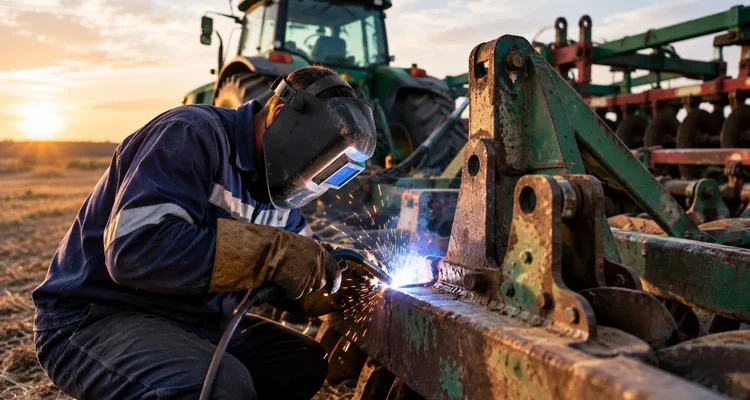
Corrosion interacting with mechanical wear, impact damage and fatigue loading creates a more complex deterioration picture than any of these factors would in isolation. Welding repairs for earthmoving and agricultural equipment operating in coastal environments need to account for this combination — not just the mechanical damage on its own.
Signs That Saltwater Has Damaged a Welded Structure
Rust Around Welded Joints
Rust appearing specifically at or near a weld deserves more attention than general surface rust on flat steel. Welds and heat-affected zones can retain moisture and salt more readily than open surfaces, and corrosion that has established itself around a joint may already be more progressed than a surface inspection suggests.
The relevant distinction is between surface rust — which affects only the outer layer of the metal and can be cleaned and treated without loss of structural capacity — and deeper corrosion involving pitting or section loss, which requires a proper assessment before any treatment or repair work begins.
Bubbling, Peeling or Flaking Paint
Coating failure around welds or on structural members is a reliable sign that something is developing beneath the surface. When paint bubbles or lifts, it is typically because corrosion has developed underneath, expanding the surface slightly and breaking the coating’s adhesion.
Once a coating has failed in one area, corrosion can spread laterally beneath surrounding intact paint. The visible extent of the problem is almost always smaller than the actual extent — which is why investigating beneath a failed coating is more informative than simply treating the area that is visibly damaged.
Cracks or Splits Around Welds
Visible cracking at or near a welded joint is a sign that warrants prompt attention. A crack may indicate that the weld has failed, that the parent metal has cracked, or that thinning of the surrounding steel has reached a point where normal loads have exceeded what the remaining material can support.
Continuing to use a cracked structural component is not an appropriate response. Cracks under load tend to propagate — often quickly — and a component that has developed a visible crack needs to be assessed before it is returned to service.
Swollen or Distorted Steel
Swelling or visible distortion in hollow sections is a warning sign of significant internal corrosion. The iron oxide produced by corrosion occupies more volume than the original metal, and when corrosion is advanced inside a hollow section, the accumulating corrosion product can cause the section walls to bulge or deform outward.
By the time this distortion is visible from the outside, the internal deterioration has typically progressed well beyond what is apparent. It should be treated as an indication of serious structural compromise, not a cosmetic issue.
Thinning, Holes or Deep Pitting
Visible holes, significant thinning or deep pitting in structural members or connections indicate material loss that goes beyond cosmetic damage. These are signs that the structural integrity of the affected component is genuinely in question. Professional assessment of the extent of the damage and the options for repair or replacement is the appropriate next step before any further use or repair work is attempted.
Can Saltwater-Damaged Welds Be Repaired?
When Welding Repair May Be Suitable
Where corrosion has been identified before it has progressed too far, and where sufficient sound parent metal remains around the affected area, welding repair is often a practical and cost-effective option.
The approach typically involves removing the corroded or damaged material, preparing the surrounding steel appropriately, and welding in new material to restore the cross-section and structural capacity of the joint. The critical factor is that the surrounding base metal is in adequate condition — clean enough to weld to properly and thick enough to carry the loads the repaired component will experience in service.
A repair that addresses only the visible damage without assessing the condition of the surrounding steel is likely to develop problems in the same area before long. The repair needs to address what is actually compromised, not just what is easy to see.
When Replacement May Be Safer
There are situations where welding repair is not the most appropriate or practical option. Severe section loss, through-thickness pitting across a significant proportion of a structural member, substantial internal corrosion in hollow sections, and structural deformation that has altered load paths are all situations where replacement may produce a more reliable outcome.
Adding new material by welding onto steel that has already been significantly compromised is not automatically safe. The new material can only perform as well as the base it is attached to. Where the surrounding steel is too thin, too porous or too weakened by corrosion to support a reliable weld, repair may be neither practical nor safe — and the most useful thing a professional assessment can do is make that distinction clear before work begins.
Why Simply Welding Over Rust Is Not a Proper Repair
This point is worth being direct about. Welding onto rusted, scaly or contaminated steel produces a weld with poor fusion to the base metal, high porosity and unpredictable mechanical properties. It may look like a weld and may even hold briefly, but it is not structurally reliable — particularly not for a component that will return to service under load in a corrosive environment.
Corroded material needs to be removed, the parent metal needs to be cleaned back to sound steel, and the prepared area needs to be assessed before any new material is deposited. There are no shortcuts to this process on structural components. Preparation is the step that determines whether the finished repair will actually perform.
How Welded Metal Structures Can Be Protected From Saltwater
Thorough Surface Preparation
Surface preparation is the foundation of both quality welding and effective corrosion protection. Rust, mill scale, salt deposits, grease, old paint and other contaminants need to be removed to expose clean parent metal before either welding or coating work takes place.
A protective coating applied over contaminated or corroded steel will not adhere properly and will not provide the protection it is designed to deliver. This applies equally to touch-up work in the field and to initial fabrication in a workshop — the quality of the preparation directly determines the quality and longevity of the result.
Protective Coatings and Paint Systems
An appropriate protective coating provides a physical barrier between the steel and the corrosive environment. In coastal and marine applications, the choice of coating system matters — marine environments are more demanding than dry inland conditions, and coatings selected for less aggressive environments may not hold up when exposed to persistent salt air and moisture.
Maintaining coatings before they fail is more effective and less costly than waiting for significant corrosion to develop beneath a deteriorating coating. Touch-up after welding or fabrication work is particularly important, as the heat from welding can damage adjacent coating in areas that may not be immediately obvious to a visual check.
Galvanising and Other Corrosion-Protection Methods
Hot-dip galvanising provides a zinc coating that protects steel through both barrier and sacrificial mechanisms. It is commonly specified for boat trailers, coastal structural steel and other components intended for long-term use in corrosive environments, and provides a meaningful improvement in service life compared to bare or painted steel alone.
Galvanised coatings are not permanent — they can be worn through abrasion, damaged by impact and eventually depleted — but they provide a more durable baseline of protection in high-exposure applications. Other approaches, including zinc-rich primers, two-pack epoxy systems and cold galv compounds, have their appropriate applications depending on the structure, its environment and how accessible it is for future maintenance. The right choice depends on the specific combination of factors involved.
Designing for Drainage and Inspection
Water pooling against welded joints or inside structural sections is one of the more straightforward contributors to accelerated corrosion. Drainage holes in hollow sections, appropriate slope on horizontal members, and avoiding enclosed dead-end spaces where water can accumulate are all practical measures that extend service life without adding significant cost at the fabrication stage.
Accessibility for inspection and cleaning is also worth considering — a structure that cannot be properly inspected and maintained is a structure where corrosion can develop undetected.
Using Suitable Materials for Marine Environments
Material selection is part of the corrosion management picture for coastal and marine steel. Appropriate steel grades, galvanised sections where the environment warrants it, and consideration of corrosion-resistant alternatives where conditions justify the additional cost can all make a practical difference to long-term service life.
The least expensive material at the fabrication stage is not necessarily the most economical choice when total service life, maintenance requirements and eventual replacement costs are factored in. For structures intended for demanding marine environments, getting material selection right at the outset is considerably more straightforward than retrofitting better protection to a structure that was not built for the conditions it is operating in.
Maintenance Tips for Welded Structures Exposed to Saltwater
Rinse Saltwater Off Metal After Exposure
Fresh water rinsing after saltwater exposure is one of the most straightforward and cost-effective things that can be done to reduce ongoing corrosion. For boat trailers and other equipment that enters the water regularly, removing salt deposits before they dry and concentrate on the surface makes a genuine difference to the rate of deterioration.
The rinse needs to be thorough — including the underside of frames, around welds, inside hollow sections where accessible, and in any area that does not naturally get exposed to rainfall — to remove salt rather than simply dilute it on easily accessible surfaces.
Inspect Welds and Joints Regularly
Regular visual inspection allows corrosion, coating failure, cracking and deformation to be identified while they are still at an early and manageable stage. For structures in regular marine service, a thorough inspection at the end of each season is a sensible minimum; structures in a more passive coastal environment benefit from at least an annual check.
Areas to focus on during inspection: weld toes and heat-affected zones, overlapping sections and internal corners, hollow sections where distortion might indicate internal corrosion, and any area where drainage is restricted or where previous rust has been noted.
Repair Damaged Protective Coatings Promptly
Bare or damaged steel should not be left unprotected once coating failure is found. An area of coating damage addressed promptly — with appropriate surface preparation and touch-up — stops a localised issue from becoming a more widespread corrosion problem. Left unprotected through a wet coastal season, the same area can develop into a significantly more involved repair.
Touch-up after welding work is particularly easy to overlook. Heat from welding damages adjacent coating, sometimes over a larger area than is immediately apparent, and those unprotected areas need attention before the equipment or structure returns to service.
Keep Water From Collecting Around Structural Connections
Mud, sand, leaves and marine debris can block drainage points and create situations where water sits against welded joints for extended periods. Keeping drainage holes clear and removing debris from around structural connections is a simple maintenance task with a meaningful effect on long-term corrosion performance.
For structures close to the water — boat ramps, marina fittings, coastal gates — this kind of routine clearing is worth building into regular maintenance rather than treating as an occasional job.
Address Small Problems Before They Become Structural Repairs
Surface corrosion treated early — cleaned, prepared and recoated — rarely progresses to structural compromise. Left without attention for a season or two, the same corrosion can penetrate into the metal cross-section and turn a surface maintenance task into a structural repair job.
This approach of addressing problems at an early stage is consistent with the philosophy behind common welding repairs for heavy machinery and equipment — catching cracks, wear and structural damage while the repair is still straightforward, rather than after they have developed into more complex problems.
The Importance of Proper Welding Preparation After Corrosion
Assessing the Extent of Corrosion
Visible rust does not always reflect the full extent of corrosion beneath the surface. Corrosion can spread laterally under intact coatings, and the parent metal on both sides of a weld may be in worse condition than the weld bead itself suggests.
A proper assessment looks beyond the immediately visible damage to the condition of the surrounding steel — checking for pitting, reduced wall thickness, signs that the metal sounds hollow when tapped, and any indication of internal corrosion in hollow sections. The goal is to identify where sound metal ends and compromised metal begins before deciding on a repair approach.
Removing Corroded Metal
Where the extent of corrosion means that compromised steel is present around a joint, it may need to be removed before new material can be welded in. Cutting back to sound metal ensures the weld is being deposited onto steel that can support it structurally and accept it metallurgically — rather than onto steel that is too thin, too porous or too contaminated to form a reliable joint.
This step is not required for every corrosion repair, but where it is required, skipping it to save time produces a repair that will not perform as intended. Deciding how much material needs to be removed is part of the assessment process.
Selecting the Appropriate Welding Process and Filler
The welding process and filler material selected for a repair should reflect the steel type, wall thickness, joint geometry, accessibility and the structural requirements of the completed repair. MIG vs TIG vs stick welding each have different characteristics suited to different applications, and the process that produces the best outcome varies depending on the specifics of the job.
An experienced welder selects the process and consumables appropriate to the material and the application — not a single default approach regardless of what the job actually requires.
Inspecting the Completed Repair
Visual inspection of the completed weld is the minimum standard. A weld with appropriate bead geometry, no visible surface porosity, proper fusion at the weld toes and no undercut is a reasonable starting point for assessing quality.
For structural components where weld failure would have significant consequences — frames, drawbars, load-bearing brackets, support structures — the completed repair should be inspected thoroughly before the component returns to service. A neat-looking weld is not automatically proof of structural adequacy, particularly in repair situations where the condition of the parent metal may be variable.
Saltwater Corrosion and Welding in the Fraser Coast
Why Coastal Conditions Matter for Hervey Bay and Surrounding Areas
Hervey Bay and the wider Fraser Coast are persistently marine environments. Salt air, high humidity through much of the year and consistent proximity to open water mean that steel structures across the region experience a level of corrosion exposure that is simply not comparable to inland areas.
This does not mean steel cannot perform well here — well-maintained and appropriately coated steel can remain serviceable for many years in coastal conditions. But it does mean that corrosion management needs to be treated as an ongoing part of maintaining steel assets, not a one-off treatment applied and then forgotten.
Marine and Coastal Welding Requirements
The types of repair and fabrication that come up regularly in coastal environments include boat trailer work, marine equipment maintenance and fabrication, structural steel repairs on coastal and waterfront properties, and machinery work where corrosion has compounded mechanical damage.
Each of these requires an understanding of how corrosion changes the steel being worked on — particularly in terms of preparation requirements, material condition assessment, and the appropriate protection of the completed repair. Marine welding corrosion repairs are more involved than standard workshop welding for precisely this reason.
Choosing a Welding Service With Experience in Coastal Conditions
A welder working on saltwater-exposed steel needs to understand corrosion, not just welding. Recognising the signs of different corrosion types, knowing when parent metal is too far compromised for reliable repair, and selecting materials and processes appropriate to the operating environment are all part of producing work that will hold up.
CJS Machinery Hire has over 25 years of construction and earthmoving experience on the Fraser Coast. That background informs how we approach welding repairs — practically, with a focus on what the steel actually needs, not just the quickest path to a finished-looking repair.
When Should You Call a Professional Welder?
When You Notice Cracks Around a Weld
A crack at or near a welded joint should not be treated as something to monitor while continuing normal use of the structure. Cracks under load propagate — often faster than corrosion progresses — and a component with a visible crack deserves assessment before it is put back into service.
Getting the component assessed promptly allows you to understand whether the crack can be safely repaired, whether the surrounding metal is in adequate condition to support that repair, and what the repair will involve.
When Rust Is Accompanied by Pitting or Metal Loss
Surface rust that cleans off and leaves sound metal beneath is a maintenance issue. Rust that is accompanied by visible pitting, measurable wall thinning or actual holes in the metal indicates material loss that warrants professional assessment of the steel’s remaining structural capacity.
The difference between manageable surface corrosion and structural material loss is not always immediately obvious from a visual inspection alone. That is part of why specialist experience in steel corrosion repair matters for these assessments.
When a Load-Bearing Component Has Been Damaged
Frames, drawbars, brackets, mounting points, support structures and similar load-bearing components require a different level of consideration than decorative or non-structural metalwork. Structural repairs to these components need to be carried out to a standard that ensures they can safely carry the loads they will experience in service.
These are not situations for improvised repairs or for welding over damage without proper assessment. If a structural component has been damaged — by corrosion, impact or a combination of both — it should be assessed by someone with the experience to determine what the repair actually needs to accomplish.
When You Are Unsure Whether to Repair or Replace
Sometimes the right answer genuinely is not obvious without a closer look at the metal. A professional assessment can determine whether sufficient sound material remains for a reliable repair, what the repair would involve, and how it compares in cost and expected service life to simply replacing the affected section or component.
Making that decision based on an accurate understanding of what the steel actually looks like — rather than an educated guess from the outside — is considerably more reliable and often more economical in the longer run.
Frequently Asked Questions About Saltwater and Welded Metal
Does saltwater make welded steel rust faster?
Yes. The dissolved salts in seawater increase the conductivity of the water, which accelerates the electrochemical corrosion process. Saltwater-exposed steel corrodes more rapidly than the same steel in a freshwater or dry environment. This applies to the steel generally, but particularly to areas around welds, where surface irregularities and the heat-affected zone can retain moisture and salt deposits more readily than flat, smooth surfaces.
Can saltwater weaken a weld?
Saltwater corrosion can reduce the thickness of the parent metal adjacent to a weld, which reduces the load-bearing capacity of the joint as a whole. The weld bead itself may appear largely intact while the surrounding steel has thinned significantly. The joint as a whole — weld and parent metal combined — may no longer be adequate for its intended load even when the weld looks reasonable from the outside.
Can you weld steel that has been exposed to saltwater?
Yes, provided the steel has been properly prepared first. Salt residues, corrosion products, and any contaminated, pitted or excessively thinned material need to be removed and the remaining steel assessed before welding begins. Attempting to weld onto inadequately prepared steel produces an unreliable result regardless of the welder’s skill.
Should rust be removed before welding?
Yes. Welding onto rusted steel results in contamination of the weld metal, porosity and poor fusion to the base metal. The extent of preparation required depends on the severity of the rust and the structural requirements of the repair, but clean, sound parent metal is a prerequisite for welding that will perform as expected.
Can a corroded boat trailer frame be repaired by welding?
In many cases, yes — provided sufficient sound parent metal remains to support the repair and carry the structural loads the trailer experiences. The extent of the corrosion, the location of the damage, and the condition of the surrounding steel all influence what repair approach is appropriate. Boat trailer welding repairs involve considerably more assessment than a quick visual check of the most obvious damage.
How do you protect welded steel from saltwater?
The most effective approach combines thorough surface preparation before coating, an appropriate coating system for the environment, regular inspection to identify coating failure before significant corrosion develops, and prompt touch-up when damage or deterioration is found. For structures that enter the water regularly, freshwater rinsing after each saltwater exposure helps remove salt deposits before they have time to concentrate on the surface.
How often should saltwater-exposed welded structures be inspected?
For structures in regular marine service — such as boat trailers that are launched frequently — a thorough inspection at the end of each season at minimum is a reasonable starting point, with additional checks after heavy use or impact events. Structures in a more passive coastal environment, such as gates or handrails near the water, benefit from at least an annual inspection, with closer attention to any area where coating failure or previous rust has been noted.
When does corrosion mean a metal structure needs to be replaced?
Replacement becomes the more appropriate option when corrosion has caused severe section loss across structural members, when extensive through-thickness pitting means there is insufficient sound metal for reliable welding, when internal corrosion in hollow sections has caused significant structural deformation, or when the scope and cost of a reliable repair make replacement the more practical and economical choice. Professional assessment is the most reliable way to determine which applies to a specific structure.
Welding Services for Saltwater-Exposed Metal Structures From CJS Machinery Hire
Saltwater corrosion is manageable when it is caught early and dealt with properly — but that means accurate assessment of the steel’s condition, correct preparation, and repairs that address the actual state of the metal, not just the surface appearance. CJS Machinery Hire provides welding repairs and fabrication from our base in Booral, with mobile welding available across the Fraser Coast.
Marine and Coastal Welding Repairs
We carry out welding and fabrication on structures exposed to coastal and marine conditions — boat trailers, marine metalwork, coastal structural steel, equipment frames and general fabrications that have experienced corrosion damage. Marine and coastal work requires proper surface preparation, appropriate material selection and suitable post-weld protection. That is the standard we work to.
Structural Welding and Steel Repairs
Structural repairs to brackets, frames, supports, mounting points and other load-bearing steel are part of our regular work. The process starts with an honest assessment of the actual condition of the steel — not just the visible damage — so the repair addresses what is genuinely compromised rather than simply covering it over.
Mobile Welding for Difficult-to-Move Equipment
Some structures and equipment cannot be transported to a workshop without significant effort or risk of further damage. Our mobile welding capability means the work comes to the job — whether that is a coastal property, a boat ramp fitting, or a piece of machinery that is not safely moved in its current condition.
Welding Across Hervey Bay, Booral, Maryborough and the Fraser Coast
We work across Hervey Bay, Booral, Maryborough and the surrounding region for welding repairs and fabrication across marine, agricultural, structural and general applications. If you have a steel structure showing signs of corrosion damage — a boat trailer frame, coastal structural steel, machinery or fabricated metalwork — get in touch to discuss what is needed, or to arrange for someone to take a look at the job.
Related Posts
Post a Comment