
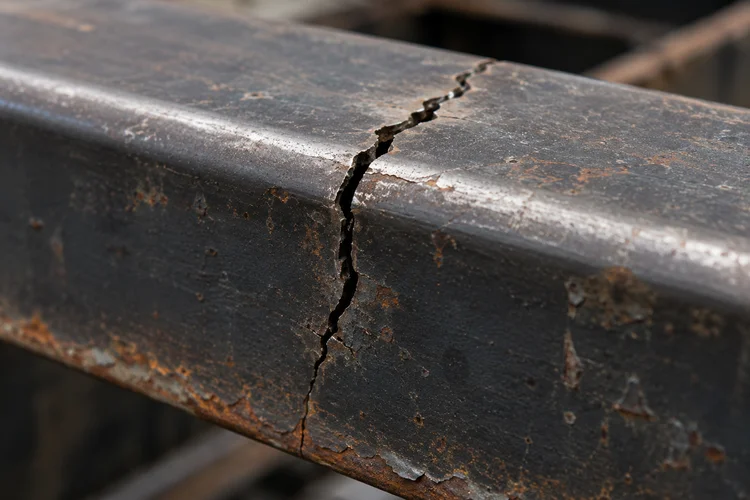
Discovering a crack in a steel component can be alarming, whether it’s on a gate, a trailer frame, a piece of agricultural equipment, or a structural beam. The immediate concern is usually the same: is it safe to keep using, and does the whole thing need replacing?
The good news is that a crack doesn’t automatically mean you’re looking at a replacement job. Whether a repair is the right option depends on the type of steel, what caused the crack, and how severe the damage actually is. Some cracks are straightforward to fix with the right welding process and preparation. Others point to deeper problems that make repair impractical or unsafe.
Getting a professional assessment first is always the smart move. It determines whether a repair is structurally sound, cost-effective, and built to last — or whether replacement is the safer path. At CJS Machinery Hire, our Welding Services cover steel repairs and fabrication across a wide range of applications, from farm equipment to marine fabrications, right here in the Hervey Bay and Booral region.
Can Cracked Steel Really Be Repaired?
The Short Answer
Yes — many cracked steel components can be successfully repaired through welding. With the right process, preparation, and materials, a properly executed weld can restore structural integrity and extend the working life of a component significantly.
That said, not every crack is suitable for repair. The condition of the surrounding steel, the cause of the crack, and the component’s intended load all factor into whether a welded repair will hold.
Why the Cause of the Crack Matters
Before any welding begins, identifying why the crack occurred is essential. Welding over a symptom without understanding the root cause often means the crack will return.
Common causes include:
- Fatigue — Repeated loading over time causes microscopic stress fractures that gradually grow into visible cracks.
- Overloading — Using a component beyond its design limits puts stress on the steel that it wasn’t built to handle.
- Impact damage — Vehicle collisions, machinery strikes, or falling objects can cause sudden cracking.
- Corrosion — Rust weakens steel progressively. Pitting and moisture penetration can create cracking beneath the surface.
- Poor previous welding — Incorrect heat input, inadequate penetration, or the wrong filler material can leave a weld that fails over time.
- Manufacturing defects — Flaws introduced during production can become stress points that crack under normal use.
Knowing the cause shapes everything that follows — the preparation method, welding process, and any additional reinforcement required.
What Causes Steel to Crack?
Metal Fatigue
Fatigue cracking is one of the most common causes of steel failure in machinery and structural applications. When steel is subjected to repeated loading, vibration, or cyclic stress over time, small cracks begin to form at stress concentration points. These cracks grow slowly and may not be visible until they’ve already progressed significantly. Regular inspection is the best defence against fatigue failure going undetected.
Impact or Accident Damage
Sudden impacts — from vehicle collisions, machinery striking other equipment, or heavy objects dropped onto a structure — can cause immediate cracking. The damage is often visible, but there may also be secondary cracking away from the main impact point that isn’t obvious at first glance.
Corrosion and Rust
Steel that has been exposed to moisture, salt, or harsh chemicals without adequate protection will corrode over time. As rust develops, it weakens the metal, causes surface pitting, and can penetrate deep into the steel. In advanced cases, corrosion can compromise the base material to the point where there’s not enough sound steel left to repair reliably.
Poor Welding Practices
A previous weld that wasn’t done correctly can become a point of failure. This includes incorrect heat input (too high or too low), lack of penetration into the base material, the wrong filler material for the steel type, and poor joint design. Identifying poor previous weld quality is part of any professional assessment before new repairs are made.
Excessive Loads
Structural and mechanical components are designed to handle specific load ratings. Using them beyond those limits — whether through overloading a trailer, adding weight to a structure it wasn’t designed for, or running equipment under sustained high stress — can cause cracking. Addressing the loading conditions is just as important as repairing the crack.
Heat Stress
Thermal cycling — repeated heating and cooling over time — causes steel to expand and contract, which can gradually open cracks at joints or thin sections. Components exposed to fire, high operating temperatures, or extreme temperature swings are particularly vulnerable.
Can Every Steel Crack Be Repaired?
Cracks That Are Commonly Repairable
Many everyday steel components can be successfully repaired by a qualified welder. Common examples include:
- Steel gates and fencing
- Fabricated frames and supports
- Trailer chassis and components
- Brackets and mounting hardware
- Platforms and walkways
- Agricultural equipment
- Marine fabrications and boat trailers
In these cases, the damage is often isolated, the surrounding steel is in reasonable condition, and the repair can be completed with standard welding techniques.
Cracks That May Require Replacement Instead
Not every cracked component is worth repairing. Situations where replacement is often the better option include:
- Multiple intersecting cracks across a component
- Severe corrosion that has significantly reduced the steel’s thickness
- Extensive metal loss leaving insufficient base material to weld to
- Components that have been distorted or bent out of shape
- Repeated repair failures at the same location
In these cases, attempting another repair may not provide a reliable long-term outcome — and in load-bearing applications, it can create a safety risk.
Why Professional Assessment Is Essential
A professional welder doesn’t just look at the crack — they assess the overall condition of the component, determine the likely cause, evaluate whether the surrounding steel is sound, and advise honestly on whether repair or replacement makes more sense. This assessment protects both the safety and the budget of the person paying for the work.
What Types of Steel Can Be Repaired?
Mild Steel
Mild steel is the most commonly repaired steel type. It has excellent weldability, responds well to standard MIG and stick welding processes, and is used across fabrication, structural work, trailers, gates, and general engineering. Most everyday steel crack repairs involve mild steel.
Structural Steel
Structural steel can be repaired, but the process requires careful inspection to confirm that full structural strength can be restored. Repairs to load-bearing structural steel need to match or exceed the original design specifications, and the quality of the weld is critical.
Stainless Steel
Stainless steel can be welded using specialised techniques, but heat control is important. Too much heat input can compromise the corrosion resistance that makes stainless steel valuable in the first place. Common repair applications include food equipment, marine fittings, and architectural components.
High-Strength and Alloy Steels
High-strength and alloy steels present greater welding challenges. Many require preheating to reduce the risk of cracking in the heat-affected zone, controlled cooling after welding, and filler materials that match the mechanical properties of the base material. Attempting to weld these steels with standard procedures and filler metals risks weakening the repair.
Cast Steel vs Cast Iron
Cast steel is generally weldable using appropriate procedures. Cast iron is a different material — it is more brittle, has a different carbon content, and requires specialised repair methods including slow preheating and controlled cooling. Misidentifying cast iron as cast steel and welding it incorrectly can cause further cracking. Correct material identification before any work begins is essential.
Why Identifying the Steel Grade Matters
Different steel grades respond differently to heat input and welding processes. Welding mild steel and welding a T1 high-strength plate are not the same job. Using the wrong process or filler material can produce a weld that looks solid but has poor mechanical properties. Professional welders identify the material before selecting the appropriate procedure.
How Professional Welders Repair Cracked Steel
Step 1: Inspect the Entire Crack
A proper repair starts with a thorough inspection — not just of the visible crack but of the surrounding area. The welder measures the crack length, checks for secondary cracks, and tries to determine the root cause. A crack that appears to be five centimetres long may extend further once cleaned and inspected under proper lighting.
Step 2: Remove the Damaged Area
Grinding out the crack entirely is standard practice. Simply welding over the top of a crack leaves the original defect in place, which means the repair will likely fail. Where a crack terminates, stop drilling — drilling a small hole at each end of the crack — may be used to prevent further propagation before the damaged material is removed.
Step 3: Prepare the Joint Properly
Good weld preparation makes all the difference. This includes thorough cleaning, removing rust and mill scale, stripping any paint or coating from the weld area, and preparing the correct bevel geometry so the weld can achieve full penetration. Welding onto contaminated or painted steel produces a poor-quality result.
Step 4: Select the Appropriate Welding Process
Process selection depends on the steel type, material thickness, the location of the repair, and the accessibility of the joint. Common processes include:
| Process | Common Applications |
| MIG (GMAW) | Mild steel fabrication, trailers, frames, gates |
| TIG (GTAW) | Stainless steel, precision work, thin sections |
| Stick (SMAW) | Site work, outdoor repairs, structural steel |
Each process has its place. A welder who only uses one process regardless of the material or situation is not giving you the best result.
Step 5: Complete the Weld
Heat control during welding is critical — too much heat causes distortion and can affect the properties of the surrounding steel; too little results in poor penetration and a weak joint. For thicker material or heavily damaged areas, multiple weld passes may be required to build up the repair gradually and ensure full fusion throughout the joint.
Step 6: Inspect and Finish the Repair
Once the weld is complete, the repair area is ground back, inspected visually for defects such as porosity or undercut, and tested functionally where the application allows. A proper finish also helps with corrosion protection going forward.
Why Welding Over a Crack Isn’t a Proper Repair
One of the most common mistakes in DIY or low-quality steel repairs is welding directly over the top of a crack without removing it. This approach leaves the original defect in place beneath the new weld. The crack remains — it’s just hidden.
Other common errors include:
- Welding over rust without cleaning back to bare metal
- Welding over paint or coatings
- Skipping joint preparation
- Using the wrong welding settings for the material thickness
- Selecting the wrong filler metal for the steel type
The consequences are predictable: the crack returns, the weld fails prematurely, and in structural applications this can create a serious safety hazard. A repair done wrong can also make the eventual correct repair harder — more material may need to be removed, and the heat-affected zone from the first attempt can affect the properties of the surrounding steel.
Our guide on Common Welding Defects and How They’re Prevented covers these failure modes in more detail.
When Is a Welded Repair Not Recommended?
Severe Corrosion Has Weakened the Steel
When corrosion has eaten away at the base material to the point where there isn’t enough sound steel to weld to, repair becomes unreliable. The weld may hold initially but the surrounding corroded material will continue to deteriorate.
Multiple Cracks Continue to Develop
If a component has cracked in multiple locations, or if new cracks keep appearing after repairs, it’s a signal that the underlying cause hasn’t been addressed — or that the component has reached the end of its useful life.
The Component Has Been Repaired Repeatedly
A component that has been welded multiple times at the same location may have compromised steel in the heat-affected zones from previous repairs. Eventually, further repair becomes impractical and the base material can no longer be relied upon.
The Damage Affects Critical Structural Integrity
Where damage is so extensive that full structural integrity cannot be restored, replacement is the responsible recommendation. Professional welders prioritise safety over completing every job — if a repair can’t be done properly, the right advice is to say so.
Replacement Is the Safer Long-Term Option
In some cases, the cost and complexity of a proper repair approaches or exceeds the cost of a replacement component. When that’s the case, replacement is often the better long-term investment.
Factors That Determine Whether a Repair Will Last
Quality of the Original Steel
Steel that was sound to begin with, and still is in the areas surrounding the damage, provides a solid base for a lasting repair. Heavily corroded or contaminated base material is harder to weld reliably.
Correct Welding Procedure
The right process, the right settings, and the right technique for the material and application. Shortcuts taken during the repair process usually show up as failures later.
Proper Heat Management
Controlling heat input during welding — and managing cooling rate after welding on some steel types — directly affects the mechanical properties of the finished repair.
Addressing the Original Cause
A repaired crack that is subjected to the same conditions that caused the original failure will crack again. Whether that means adjusting loads, improving drainage to reduce corrosion, or modifying the design of a component, fixing the cause is part of the repair.
Future Loading Conditions
A repair that is adequate for normal operating loads may not hold up if loading conditions change. Being clear with the welder about how the component will be used helps ensure the repair is sized and specified appropriately.
Ongoing Maintenance and Inspection
Repairs should be inspected periodically, particularly on components subject to heavy use, vibration, or exposure to the elements. Catching a developing issue early is far cheaper than dealing with a full failure.
Can Structural Steel Be Safely Repaired?
When Structural Repairs Are Possible
Structural steel repairs are carried out regularly across construction, infrastructure, and heavy industry. When the damage is isolated, the surrounding steel is sound, and the repair can be completed to specification, welded repairs on structural steel can restore full load-bearing capacity.
Additional Considerations for Load-Bearing Steel
Structural repairs require more careful attention to joint design, penetration, and post-weld inspection than general fabrication repairs. In regulated environments, documentation and testing may be required. The welding procedure must be appropriate for the steel grade, and filler metals must match the mechanical properties of the base material.
Why Experience Matters for Structural Welding
Structural failures have serious consequences. A crack in a gate can be inconvenient; a crack in a load-bearing beam can be dangerous. The experience and judgement of the welder — knowing when a repair is appropriate and how to execute it correctly — matters significantly in these situations.
Signs a Steel Crack Is Getting Worse
Some cracks are stable; others are progressing. Warning signs that a crack is actively worsening include:
- The visible crack length is increasing over time
- Fresh rust lines appearing along the crack
- Paint or coating splitting at the edges of the crack
- Visible movement or flexing at the crack location
- Distortion or misalignment of the component
- Unusual noises such as creaking or cracking sounds under load
- Increased vibration in machinery or structures
If you notice any of these signs, stop using the component until it has been professionally assessed. Continuing to load a worsening crack increases the risk of sudden failure and makes the eventual repair more difficult.
Repair vs Replacement: Which Option Makes More Sense?
Every situation is different, but the table below outlines the general factors that tend to point one way or the other.
| Repair May Be Suitable | Replacement May Be Better |
| Localised, isolated crack | Extensive corrosion throughout the component |
| Steel remains structurally sound | Severe distortion or bending |
| Damage is contained to one area | Multiple branching or intersecting cracks |
| Repair is cost-effective | Repair cost approaches or exceeds replacement |
| Safe long-term repair is achievable | Structural integrity cannot be fully restored |
There’s no universal rule. A component that looks straightforward to repair might reveal additional problems once the crack is opened up, and some components that look badly damaged can be repaired effectively with the right approach. A proper assessment is the only reliable way to determine which option makes sense in any given case.
How to Prevent Steel Cracks in the Future
Inspect Steel Components Regularly
Regular visual inspection of gates, frames, trailers, structural supports, and machinery components allows you to catch early-stage cracking before it becomes a major problem. Early repairs are simpler and cheaper than advanced ones.
Repair Small Cracks Before They Grow
A small crack that is identified and repaired promptly is a straightforward job. Left alone, it will grow — often faster under continued loading. Don’t wait.
Avoid Overloading Structures
Use components within their rated load limits. Overloading is one of the most common causes of cracking in trailers, frames, and structural supports. If your requirements have changed, have the component assessed and modified appropriately rather than simply pushing it beyond its limits.
Protect Steel Against Corrosion
Paint, galvanising, epoxy coatings, and regular maintenance all help protect steel from moisture and corrosion. Keeping coatings in good condition and addressing rust promptly significantly extends the working life of steel components.
Use Qualified Welders for Repairs
A repair done correctly the first time lasts. A poor-quality repair often fails sooner than expected and can make the next attempt more difficult. Using experienced welders who understand the materials and processes involved makes a real difference in outcomes.
Eliminate the Root Cause of Previous Failures
If a component cracked because of overloading, poor drainage, insufficient support, or a design flaw, repairing the crack without addressing the cause means the same problem will return. Take the time to understand why the failure occurred and make the necessary changes.
Steel Crack Repairs in Hervey Bay and Booral — Talk to CJS Machinery Hire
If you’ve got a cracked steel component and you’re not sure whether it can be repaired or needs replacing, the best place to start is a professional assessment. At CJS Machinery Hire, our Welding Services cover cracked steel repair, structural fabrication, trailer repairs, agricultural equipment, marine fabrications, and general steel work across the Hervey Bay and Booral region.
We’ll give you a straight answer on whether a repair is the right option, how it will be done, and what it will cost. If replacement is the better call, we’ll tell you that too.
Get in touch with the team at CJS Machinery Hire to discuss your repair or fabrication needs. We’re a family-owned business with over 25 years in construction and fabrication — we know the work, and we’ll give you honest advice.
Related Posts
Post a Comment