
It depends on what you’re trying to clean. Hot water has a clear advantage when grease, oil or heavy industrial grime is involved. For general dirt, mud and routine exterior maintenance, cold water does the job just as well — and usually more cost-effectively.
This guide breaks down how each method works, where each one earns its place, and how to make the right call before you start spraying.
Hot Water vs Cold Water Pressure Washing: What’s the Difference?
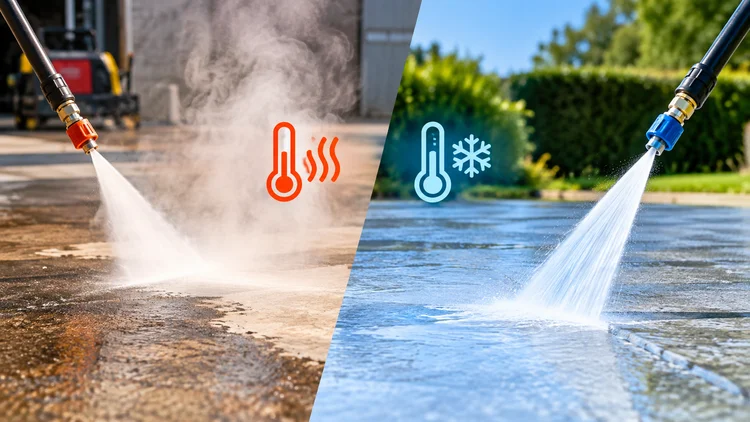
Both methods use high-pressure water to dislodge dirt, contaminants and surface buildup. The core mechanics are the same. Hot water simply adds heat as a second cleaning mechanism alongside pressure.
Higher water temperature doesn’t automatically mean a better clean. The right choice depends on:
- The type of contamination you’re dealing with
- The surface material being cleaned
- The amount and age of the buildup
- The size and scope of the job
You’ve probably heard the terms pressure washing and power washing used interchangeably — and in most conversations, that’s fine. Technically, heated-water cleaning is more commonly associated with “power washing,” though the distinction isn’t always applied consistently in the industry.
How Does Cold Water Pressure Washing Work?
Cold Water Uses Pressure to Remove Dirt and Grime
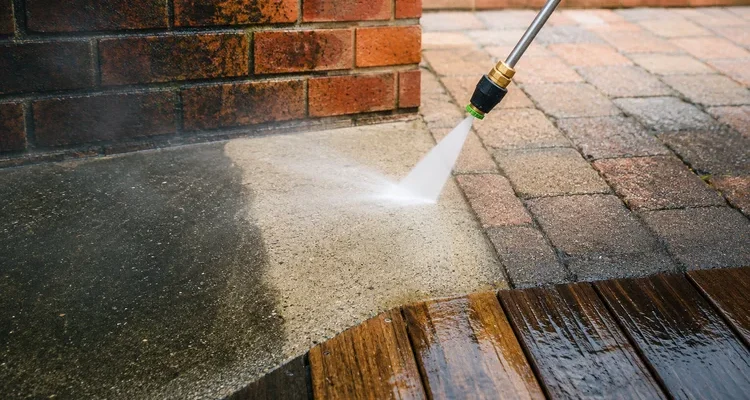
Cold water pressure washing forces water at high velocity through a nozzle, creating a focused stream or fan spray that physically dislodges contaminants from a surface. The main variables that determine how well it cleans are:
- PSI (pounds per square inch): The pressure at which water leaves the nozzle. More pressure isn’t always better — excessive PSI on the wrong surface causes damage.
- GPM (gallons per minute): Water flow. Higher GPM helps rinse loosened contamination away. PSI and GPM work together — you need both to clean efficiently.
- Nozzle selection: A narrow 0° nozzle concentrates all force at a single point. A 40° or 65° nozzle fans the water out for broader, gentler coverage. Nozzle choice should match the surface and contamination.
- Spray distance and angle: Closer means more force but more risk of damage. Holding the nozzle at an angle helps lift contamination away from the surface rather than driving it in.
Our complete guide to pressure washing goes deeper on each of these variables. It’s also worth understanding whether pressure washing can damage concrete, brick or outdoor surfaces before you start — incorrect technique causes problems that have nothing to do with water temperature.
What Is Cold Water Pressure Washing Best For?
Cold water is effective for most general exterior cleaning:
- Concrete driveways, footpaths and pavers
- Patios and outdoor entertaining areas
- Retaining walls and fences (where material and condition allow)
- General dirt, dust, mud and surface debris
- Some mould and algae buildup (with appropriate treatment)
Advantages of Cold Water Pressure Washing
- Effective for the majority of residential and general exterior jobs
- Simpler setup and lower energy requirements
- Practical for large surface areas
- Cost-efficient when contamination is primarily dirt, dust and loose organic matter
How Does Hot Water Pressure Washing Work?
Heat Adds a Second Cleaning Mechanism
Hot water pressure washing uses the same pressure and flow mechanics as cold water. The difference is thermal energy — heat that loosens and breaks down certain contaminants that resist cold water alone, particularly grease, oil and sticky residues.
When heated water contacts grease or oil, it softens the molecular bonds that make those substances adhere to surfaces. The contamination becomes easier to lift and rinse away, which means less mechanical effort — and in many cases, less chemical use.
That said, heat doesn’t replace the need for proper pressure, technique or pre-treatment products where the contamination is severe. It’s a tool, not a shortcut.
What Is Hot Water Pressure Washing Best For?
Hot water earns its place when contamination involves:
- Grease and oil (including automotive fluids)
- Heavy grime with an oily component
- Food-related grease in commercial environments
- Sticky or built-up residues
- Workshop and industrial surfaces
- Heavy equipment and machinery
- Forecourts, service bays and commercial hard surfaces with accumulated oily residue
Hot Water vs Cold Water Pressure Washing: Side-by-Side Comparison
| Factor | Hot Water | Cold Water |
| General dirt and mud | Excellent | Excellent |
| Grease | Excellent | Moderate |
| Oil | Excellent | Moderate |
| Heavy grime | Excellent | Good |
| Mould / algae | Effective with appropriate treatment | Effective with appropriate treatment |
| Large outdoor areas | Excellent | Excellent |
| Residential driveways | Conditional (best for oil stains) | Excellent (cost-effective default) |
| Commercial / industrial cleaning | Excellent | Good–Excellent |
| Energy requirements | Higher | Lower |
| Equipment complexity | Higher | Lower |
| Best use | Grease, oil and stubborn contamination | General exterior cleaning |
The table isn’t meant to suggest hot water is universally superior — it isn’t. Cold water handles most everyday jobs without any disadvantage. The distinction is that each method has a different strength, and choosing the right one means looking at what’s on the surface, not what sounds most powerful.
Hot Water vs Cold Water for Specific Types of Contamination
Dirt and Mud
Either method works. Hot water won’t make a meaningful difference on ordinary dirt and mud — pressure, flow rate and technique matter far more. A cold water pressure wash with the right nozzle and appropriate PSI will clean a muddy driveway or path just as effectively, at lower cost.
Grease and Oil
This is where hot water has the clearest advantage. Cold water can move oily contamination, but without heat it tends to spread it across the surface rather than break it down. Heat loosens the grease at a molecular level, making it easier to lift and rinse clear. For oil-stained driveways, greasy workshop floors or commercial surfaces with years of automotive buildup, hot water pressure washing will produce better results with less effort.
Heavily contaminated areas may still need a pre-treatment product applied before washing. Heat improves the process — it doesn’t replace thorough preparation where the staining is severe.
Mould, Algae and Mildew
Neither method is a complete solution on its own. The key factors are appropriate treatment products, adequate dwell time and correct pressure for the surface. On surfaces where biological growth is persistent or widespread, pressure washing vs soft washing is worth understanding — lower-pressure, chemical-based cleaning often achieves better long-term results than heat or high pressure alone.
Rust and Mineral Staining
Neither hot nor cold water will resolve rust staining or mineral deposits without specialist treatment products. Increasing pressure or temperature before addressing the chemistry usually causes surface damage before it achieves anything useful. If staining is the primary problem, a professional assessment is the right starting point.
Sticky Residue and Built-Up Grime
Hot water has a meaningful advantage here. Tacky or resinous substances that have bonded to the surface over time soften when heated, making them easier to lift and rinse away. Cold water can shift some of this material but typically requires more passes to achieve the same outcome.
Is Hot Water Pressure Washing Safe for All Surfaces?
No — and this matters more than most people expect.
Water temperature is only one part of the equation. Pressure setting, nozzle selection, distance from the surface and cleaning products all affect whether a job is safe or damaging. Hot water isn’t automatically appropriate just because it cleans more aggressively.
Concrete and Pavers
Generally durable when cleaned correctly. The main risks — surface etching and joint erosion — come from excessive pressure, a nozzle angle that’s too direct, or holding the wand too close, not from water temperature. Understanding whether pressure washing can damage outdoor surfaces is useful groundwork before you start.
Brick and Masonry
Not all brick and masonry is equal. Older or deteriorating brick and mortar can be damaged by aggressive technique regardless of temperature. Softer mortar joints are particularly vulnerable — surface condition needs to be assessed before cleaning begins.
Painted and Rendered Surfaces
Hot water combined with high pressure can cause lifting, bubbling or stripping on painted or rendered surfaces. A lower-pressure approach is usually more appropriate here — and on some surfaces, the difference between pressure washing and soft washing is the difference between a clean wall and a damaged one.
Timber and Weathered Surfaces
High pressure can raise the grain, cause splintering or drive water into the wood — and hot water doesn’t compensate for incorrect technique. Surface assessment before cleaning is essential: what condition is the timber in, and what pressure and distance does that material actually warrant?
Hot Water Pressure Washing for Commercial and Industrial Cleaning
Removing Grease from Concrete
Grease and oil on concrete is one of the most common commercial cleaning challenges. Cold water tends to move the residue rather than break it down — redistributing it rather than removing it. Hot water pressure washing softens the grease so pressure can rinse it clear.
For heavily soiled areas, pre-treatment applied before washing helps lift the contamination and improves rinse-off efficiency. Runoff management is also worth considering on sites where oily wastewater could affect stormwater drainage.
Cleaning Heavy Equipment and Work Areas
Grease, oil and compacted grime accumulate across machinery, vehicles and the floors beneath them. Hot water pressure cleaning is particularly useful in these environments because the contamination responds well to heat. Beyond appearance, clean equipment is easier to inspect, makes wear and damage easier to identify, and keeps working components accessible.
Commercial Floors and High-Traffic Areas
Workshops, food preparation areas, loading docks and forecourts accumulate oil and grime faster than residential surfaces. Heated pressure washing works through that buildup more efficiently when the contamination has an oily component. The right method still depends on the specific surface and what it’s been exposed to, but hot water is often the better-equipped option in commercial settings.
Does Hot Water Pressure Washing Remove Mould Better?
Not necessarily — at least not on its own.
Physically shifting visible mould growth and treating the underlying biological contamination are two different things. High-pressure water, hot or cold, can remove the surface appearance of mould. But without addressing the spores, regrowth is likely.
Effective mould treatment involves the right cleaning products, adequate dwell time, appropriate pressure for the surface and proper rinsing. On surfaces where mould keeps returning, the choice between pressure washing and soft washing often matters more than whether the water is hot or cold.
Hot Water vs Cold Water Pressure Washing for Driveways and House Exteriors
Driveways
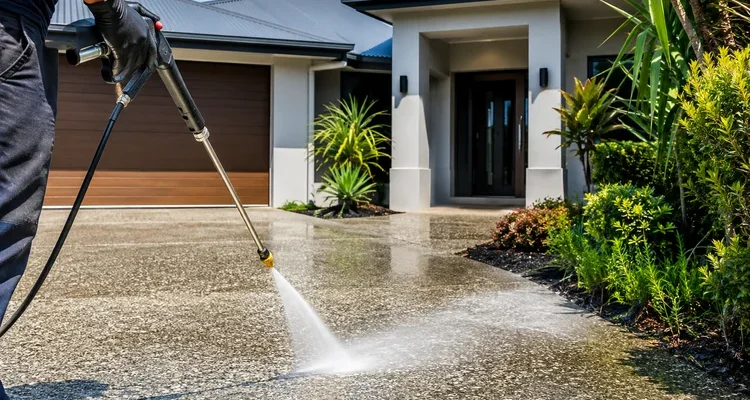
For general dirt, dust and weathering, cold water is more than adequate — and the more cost-effective choice. Understanding the benefits of pressure washing your driveway goes beyond method selection, but when it comes to oil or grease stains, hot water has a clear advantage. Cold water may lighten a stain; heat loosens it at a deeper level. Old, set-in stains may also need pre-treatment before washing regardless of water temperature.
For mould and algae on driveways, focus on treatment products and contact time rather than heat — particularly if the surface is near garden beds or has an existing sealant.
Before selecting a method, consider the surface material, the type and age of staining, whether a sealant is present, and the overall condition of the concrete or pavers.
House Exteriors
Most residential exterior cleaning — dirt, cobwebs, mould, algae, salt and general weathering — doesn’t require heated water. House surfaces accumulate environmental contamination rather than oily residue, which is exactly the type of job cold water handles well.
Some house surfaces require careful evaluation regardless of temperature. Render, weatherboard, painted cladding and older brick need consideration of pressure, nozzle and distance before any washing begins. Knowing how often you should pressure wash your home also factors in — regular light maintenance is easier on surfaces than infrequent heavy cleans.
For delicate materials — painted surfaces, weatherboard, older render, roofs and areas where water intrusion could be a concern — the right method matters far more than water temperature. In many of these cases, soft washing is the better option.
Does Hot Water Pressure Washing Cost More?
Generally, yes. Heating the water adds energy or fuel costs, the equipment is more complex, and setup can take longer. The type and severity of contamination also affects overall job time.
That said, hot water can offset some of this through efficiency — a greasy surface that would need multiple cold water passes might be cleared in a single run with heat, reducing the overall time on the job.
At CJS, we don’t publish fixed rates because jobs vary too much in size, contamination and access. Get in touch and we’ll give you an honest assessment of what your job actually involves.
What Matters More Than Water Temperature?
Water temperature is one factor among many — and often not the most important one.
Pressure and PSI: Matching pressure to the surface matters more than maximising it. Excessive PSI damages concrete, etches pavers, strips paint and erodes mortar joints. A lower, well-directed setting often outperforms a high one used carelessly.
Water flow and GPM: High PSI with low flow may struggle to clear debris efficiently. Both work together — you need adequate flow to rinse what the pressure dislodges.
Nozzle selection: The wrong nozzle — particularly a narrow one on a surface that can’t handle it — can cause damage that no water temperature would cause. Nozzle choice should always match the surface and the contamination type.
Distance and technique: Keeping the nozzle moving, maintaining a consistent distance and using steady overlapping passes produces a more even clean and reduces the risk of surface marks or concentrated damage.
Cleaning products and dwell time: Some contaminants respond better to the right product than to either pressure or temperature. Mould, algae, rust and mineral staining all benefit from appropriate treatment with adequate contact time before rinsing.
Common Mistakes When Choosing Between Hot and Cold Water
Assuming hot water always means a better clean. Hot water earns its place with grease, oil and heavy industrial contamination. On surfaces that don’t need it, it adds cost without improving results.
Turning up pressure instead of treating the contamination. When a stain doesn’t shift, the instinct is to apply more force. A pre-treatment product with adequate dwell time is usually the better answer — more pressure on a well-cleaned surface causes damage before it clears the stain.
Using the same setup on every surface. Concrete, render, timber and pavers all tolerate different pressures, nozzles and temperatures. A single approach across mixed surfaces produces inconsistent results and risks damage.
Ignoring existing surface damage. Cracks, loose mortar, flaking paint and deteriorating render are entry points for pressurised water. A surface check before starting is always worth the time.
Trying to remove oil with cold pressure alone. Without heat, cold water tends to spread oily contamination rather than break it down. Hot water combined with appropriate technique — and pre-treatment where needed — is the correct approach.
When Should You Call a Professional?
Some jobs are better handled by someone who does this regularly:
- Large or difficult-to-access areas
- Heavy oil or grease contamination that hasn’t responded to previous cleaning
- Commercial properties needing a higher standard of cleanliness
- Significant mould or algae growth across a large surface area
- Delicate or unfamiliar surfaces where incorrect technique could cause expensive damage
- Jobs requiring specialist cleaning treatments
- Any situation where you’re not confident which method, temperature or pressure is appropriate
Getting it wrong on rendered walls, painted surfaces or older pavers can create repair costs that far exceed what a professional clean would have cost in the first place.
Hot Water vs Cold Water Pressure Washing: Which Should You Choose?
Choose cold water when:
- You’re removing ordinary dirt and general grime
- You’re cleaning hard outdoor surfaces — driveways, paths, patios, fences
- You’re carrying out routine exterior maintenance with no significant greasy contamination
Choose hot water when:
- Oil or grease is the primary problem
- There is heavy, sticky contamination that hasn’t responded to cold water
- You’re cleaning commercial or industrial surfaces with accumulated oily grime
Choose professional advice when:
- You’re unsure what the surface can tolerate
- The contamination is severe or longstanding
- The property includes delicate materials or a combination of contamination types you’re not confident addressing
Professional Pressure Washing Services from CJS Machinery Hire
At CJS Machinery Hire, our pressure washing services cover residential and commercial properties across Hervey Bay, Maryborough and the surrounding Fraser Coast region.
Before we start any job, we assess the surface and the contamination. That assessment drives everything — temperature, pressure, nozzle, products and technique are chosen based on what’s actually in front of us. We don’t default to maximum pressure or the hottest available water, because those aren’t always the right tools for the job.
Services include:
- Driveway and concrete cleaning
- Exterior house washing
- Patio, path and outdoor surface cleaning
- Commercial pressure washing
- Hard surface cleaning for industrial and workshop environments
If you’re not sure which approach is right for your surface or contamination, we’re happy to take a look and give you a straight answer.
Get in touch with the CJS team today to discuss your job or request a quote — we’ll give you an honest assessment and get it done properly.
Frequently Asked Questions About Hot and Cold Water Pressure Washing
Is hot water better than cold water for pressure washing?
Not universally. Hot water performs better on grease, oil and heavy industrial contamination. For general dirt, mud and routine exterior cleaning, cold water is just as effective and more cost-efficient.
Does hot water pressure washing remove grease better?
Yes. Heat loosens the molecular structure of grease and oil, making it easier to lift from the surface and rinse away. Cold water can move greasy contamination but is more likely to spread it than fully break it down.
Can you pressure wash a driveway with cold water?
Yes — for most residential driveways, cold water is perfectly adequate. If oil or grease stains are involved, hot water will produce better results. There are also broader benefits of pressure washing your driveway beyond method selection that are worth understanding before you start.
Is hot water pressure washing better for mould?
Not on its own. Mould requires appropriate treatment products and adequate dwell time. Heat alone doesn’t eliminate biological growth — the right treatment approach matters more than water temperature.
Can hot water damage concrete?
Hot water alone is unlikely to damage concrete. Combined with excessive pressure, a narrow nozzle or poor technique, however, it can cause surface etching. It’s the combination of variables — not temperature in isolation — that determines whether concrete is cleaned safely.
Can you use hot water on a house exterior?
It depends on the surface. Hard surfaces like brick can generally tolerate hot water at appropriate pressure. Painted surfaces, weatherboard and older materials require more care — and in many cases a soft wash approach is more appropriate regardless of water temperature.
Is hot water pressure washing more expensive?
Generally, yes. Heating water adds energy costs and the equipment is more complex. However, hot water can reduce total job time on heavily contaminated surfaces, which may partially offset the additional cost.
What temperature should pressure washing water be?
For general cleaning, ambient (cold) water is fine. For grease and oil, heated water in the range of 60–80°C is commonly used in commercial equipment. The appropriate temperature depends on the contamination and surface — it’s not a fixed setting.
Does hot water pressure washing use less detergent?
In some cases. Heat can reduce the chemical product needed to shift greasy contamination. That said, mould, algae and mineral staining still require appropriate treatment products regardless of water temperature.
Is pressure more important than water temperature?
For most general cleaning, yes. Pressure, flow, nozzle selection and technique collectively have more influence on the outcome than temperature. Temperature becomes the deciding factor specifically when dealing with grease, oil and heavy industrial contamination.
What is the difference between pressure washing and power washing?
The terms are often used interchangeably. “Power washing” is more commonly associated with heated-water cleaning, while “pressure washing” can refer to either. The distinction isn’t always applied consistently — it’s worth clarifying which method is being used when comparing services.
The Right Clean for Every Surface — That’s the CJS Standard
Choosing between hot and cold water pressure washing isn’t complicated once you understand what each method is designed to do. Cold water is the practical default for most exterior cleaning. Hot water earns its place when grease and oil are involved.
What matters most in every job is matching the complete cleaning method — pressure, flow, nozzle, products, technique and temperature — to the surface and contamination in front of you, rather than defaulting to whatever sounds most powerful.
If you’ve got a cleaning job and you’re not sure where to start, the CJS team serves Hervey Bay, Maryborough and the wider Fraser Coast area — residential and commercial. We’ll give you a straight answer on the right approach and get it done properly.
Get in touch with CJS today — and let’s get it done right the first time.
Related Posts
Post a Comment