
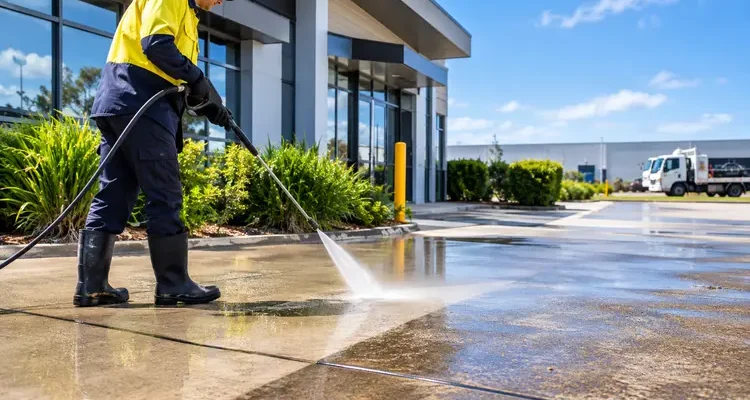
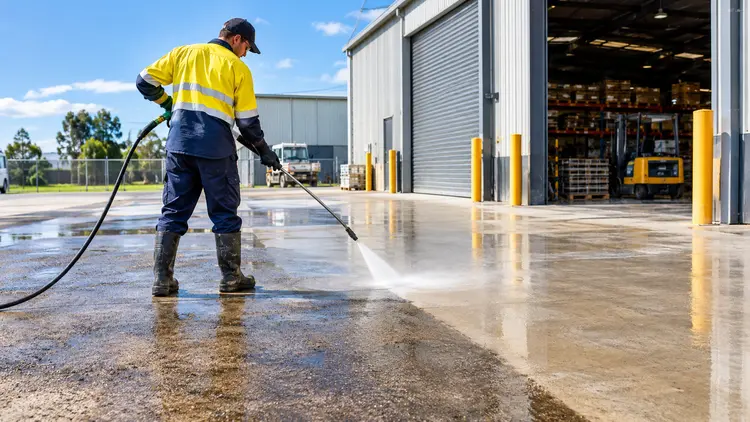
Industrial buildings take a beating. Between heavy vehicle movements, chemical spills, airborne dust and constant foot traffic, warehouses, workshops and manufacturing facilities accumulate the kind of grime that ordinary cleaning equipment simply can’t shift. Grease migrates into porous concrete, tyre marks embed themselves into loading bay surfaces, mould takes hold in shaded corners, and a season’s worth of coastal salt deposits gradually dulls even the most robust building exterior.
Routine sweeping and mopping keeps the surface presentable on a daily basis, but it doesn’t address the deeper contamination that builds up in busy industrial environments over time. Floors develop slippery patches. Drains clog. Building exteriors become discoloured. Loading zones start to look tired. Left too long, some of that contamination becomes genuinely difficult to remove and may obscure underlying surface damage that warrants attention.
Industrial pressure washing offers a practical way to clean suitable hard surfaces thoroughly — clearing accumulated deposits from concrete floors, hardstand areas, exterior walls and loading zones as part of a broader property maintenance programme. The result isn’t just a cleaner-looking facility. It’s a surface that’s easier to inspect, easier to maintain and better presented to the customers, contractors and delivery drivers who visit your site.
CJS Machinery Hire offers industrial pressure washing services for businesses across Hervey Bay, Maryborough and the surrounding Fraser Coast region. This guide covers what industrial pressure washing involves, where it’s used, how it’s carried out and what to think about when planning a clean at your facility.
What Is Industrial Pressure Washing?
Understanding Industrial Pressure Cleaning
Industrial pressure washing uses high-pressure water — delivered at controlled flow rates through suitable nozzles — to remove surface contamination from compatible hard surfaces. The goal is to dislodge and flush away dirt, organic growth, grease residue and other deposits without damaging the underlying material.
The effectiveness of any pressure cleaning job depends on more than just the pressure setting. Water flow rate, nozzle type and pattern, nozzle distance from the surface, spray angle and the use of appropriate cleaning agents all contribute to the outcome. Getting any one of these wrong can mean either a poor result or unnecessary surface damage.
Industrial pressure cleaning differs from residential work in several important ways. The areas involved tend to be significantly larger, the contamination is often heavier and more varied, access arrangements are more complex, and there are usually operational constraints — machinery, stock, employees and deliveries — that need to be worked around. Wastewater management is also a more significant consideration in industrial environments, particularly where oil, grease or chemical residue is present.
The appropriate cleaning method always depends on the surface material and the nature of the contamination. What works well on a concrete hardstand may not be suitable for a painted metal cladding panel or a rendered exterior wall.
Industrial Pressure Washing vs General Commercial Cleaning
Offices, retail premises and hospitality venues accumulate everyday grime — foot traffic, dust, food residue — that responds well to standard commercial cleaning methods. Industrial properties are a different proposition.
Warehouses and workshops regularly deal with heavy deposits of oil, grease, production dust and vehicle-related grime. Forklifts and heavy trucks leave tyre marks. Machinery drips oil onto concrete slabs. Dust from cutting, grinding or manufacturing processes settles across entire floor areas. Chemical residue accumulates in processing zones.
This heavier contamination often requires specialist equipment, appropriate chemical pre-treatment and more considered planning than a typical commercial clean. It also requires careful thought about wastewater management. When wash water picks up oil, grease or chemical residue, it can’t simply be directed into the nearest stormwater drain.
Planning around active operations adds another layer of complexity. Cleaning a retail floor after hours is straightforward. Cleaning a warehouse floor around palletised stock, active forklifts, scheduled deliveries and a working production line requires coordination, clear communication and careful staging.
Pressure Washing vs Soft Washing for Industrial Buildings
High-pressure cleaning is appropriate for durable surfaces that can withstand the force of the water jet — poured concrete slabs, unpainted brickwork, concrete block walls and similar substrates. For these surfaces, the mechanical action of the pressurised water is part of what makes the cleaning effective.
Not everything on an industrial property is that durable. Painted metal cladding, rendered exterior walls, coated concrete and some masonry finishes can be damaged by excessive water pressure. Forcing water into joints, seals or wall cavities can also cause moisture problems that outlast the cleaning job by months.
For these materials, a lower-pressure approach — sometimes called soft washing — is more appropriate. This method relies more on the cleaning chemistry and less on the mechanical force of the water. The trade-off is that it’s better suited to biological growth like mould and algae than to heavy grease or embedded contamination.
Choosing the right method matters. Applying high pressure to a surface that can’t handle it can strip protective coatings, damage mortar joints, etch concrete or cause water intrusion into building cavities. A more detailed look at this distinction is available in our article on pressure washing vs soft washing.
Benefits of Pressure Washing Warehouses, Workshops and Industrial Buildings
Remove Built-Up Dirt, Grease and Industrial Grime
Industrial surfaces accumulate contamination quickly. A warehouse floor that looks reasonably clean after daily sweeping may have years of embedded oil residue, forklift grime and concrete dust worked into its surface. A workshop floor may carry layers of oil stains on top of one another, each one harder to shift than the last.
Pressure washing removes a significant proportion of this built-up contamination from compatible surfaces. For stubborn stains — particularly older oil deposits that have had time to penetrate porous concrete — pre-treatment with an appropriate degreaser is often necessary before washing. Applying more pressure isn’t the answer; the right chemical preparation is.
Some stains won’t disappear entirely, particularly deep oil penetration on uncoated concrete that has been absorbing spills for years. But even partial removal reduces the buildup that can continue to accumulate on top of existing contamination.
Help Maintain Cleaner and Safer Work Areas
Wet, greasy or algae-covered surfaces create slip hazards in any workplace. Organic growth on outdoor paths and loading areas becomes particularly hazardous in wet weather, and oil residue on workshop floors is a standing safety risk.
Pressure washing suitable surfaces as part of a regular maintenance programme removes a range of slip-contributing contaminants and supports general workplace housekeeping. That said, it’s worth being clear about the limits. Pressure washing alone doesn’t guarantee a slip-resistant surface — the underlying concrete texture, any applied coating, the presence of drainage and the level of ongoing contamination all play a role. Identifying oil spills, wet areas and other specific hazards before and after cleaning is still necessary.
Improve the Appearance of Industrial Properties
Not every industrial property is out of sight from its customers. Warehouses with trade counters, workshops that service customer vehicles, industrial premises that host suppliers, contractors and delivery drivers — all of these benefit from a site that looks looked-after.
Clean building exteriors, tidy entrances, presentable concrete areas and clean loading zones give a better first impression and signal that the business takes pride in its operation. Routine cleaning maintains that standard over time without requiring periodic intensive work to recover from years of accumulated grime.
Support Ongoing Building and Surface Maintenance
One of the less obvious benefits of regular industrial pressure washing is that it makes surfaces easier to inspect and maintain. Salt deposits, organic growth and accumulated grime can mask cracks in concrete, deteriorating joints, coating breakdown and early signs of corrosion. Cleaning a surface first makes these defects visible and allows them to be addressed before they worsen.
It’s important to be clear that pressure washing doesn’t repair damaged concrete, restore failed coatings or prevent corrosion on its own. It removes the contamination that obscures these problems — identifying them is part of the maintenance value, not a repair solution in itself.
Reduce the Need for Labour-Intensive Manual Cleaning
Manually scrubbing a 2,000-square-metre warehouse floor is impractical. Appropriate pressure washing equipment — including surface cleaner attachments for large flat areas — can cover the same ground far more efficiently, with better and more consistent results.
That efficiency is best realised when the work is planned properly. Cleaning that’s coordinated with maintenance schedules, stock movements and quieter operating periods minimises disruption and produces better outcomes than reactive cleaning squeezed around active operations.
Heavily contaminated areas or surfaces with specialised requirements may still need manual preparation, targeted chemical treatment or additional cleaning methods before or after pressure washing. The equipment improves efficiency; it doesn’t eliminate every step of the process.
Where Can Industrial Pressure Washing Be Used?
Warehouse Floors and Concrete Slabs
Warehouse floors are among the most common applications for industrial pressure washing. Concrete slabs in busy warehouses collect dust, dirt, oil drips, forklift tyre residue and general operational grime over time. Swept surfaces look cleaner but retain the contamination that has worked its way into the concrete.
Pressure washing a warehouse floor requires planning. Stock and movable equipment need to be cleared from the area first. Drainage arrangements should be confirmed before washing begins. Electrical installations and any sensitive equipment near floor level need to be protected.
The correct technique for concrete flooring — appropriate pressure settings, the right nozzle type and a systematic working pattern — removes surface contamination without etching or pitting the concrete unnecessarily. Allowing the floor to dry fully and checking that drainage is functioning properly before reopening the area to forklifts and foot traffic is also important.
Workshop Floors and Vehicle Service Areas
Mechanical workshops and vehicle maintenance facilities deal with a particular combination of contamination: engine oil, hydraulic fluid, gear oil, grease, tyre marks and general workshop dirt. This mixture embeds itself into concrete over time and becomes increasingly difficult to address with standard cleaning methods.
Identifying the specific contaminant before selecting a cleaning product matters here. A degreaser appropriate for engine oil may not perform the same way on certain types of industrial lubricant or hydraulic fluid. Where available and appropriate for the contamination, hot-water cleaning can improve results on oily surfaces — this is covered in more detail in our comparison of hot water vs cold water pressure washing.
Wastewater management is a significant consideration in workshop cleaning. Oil-contaminated runoff must not be directed into stormwater drains. Suitable containment and disposal arrangements need to be in place before the job begins.
Factory Floors and Production Areas
Manufacturing and processing environments generate dust, residue and grime that varies depending on the industry. Food processing facilities deal with different contamination from metal fabrication shops, and both differ from plastics manufacturing or chemical processing.
Pressure washing suitable hard surfaces around production equipment is possible, but it requires more careful preparation than cleaning an empty warehouse floor. Electrical equipment, control panels, motors, conveyors and stored raw materials all need to be protected. In some production environments, sensitive processes — humidity control, contamination-free areas, food safety zones — require cleaning methods that go beyond conventional pressure washing.
Understanding the specific requirements of the production environment before planning a clean is essential. Some areas of a factory will be suitable for standard pressure washing; others may require entirely different procedures.
Loading Docks and Dispatch Areas
Loading docks and dispatch areas take heavy use. Trucks and delivery vehicles leave tyre marks and drip contamination onto concrete surfaces. Mud and debris tracked in from outdoor yards accumulates in goods-receiving areas. Organic growth takes hold in damp corners near dock levellers.
These areas are also among the most visible parts of an industrial property to external visitors — drivers, suppliers and clients regularly pass through. Keeping them clean supports a professional presentation and makes routine maintenance more effective.
Cleaning loading docks requires coordination with the delivery schedule. Wet or freshly cleaned surfaces need to be clearly marked, and vehicle access and pedestrian routes need to be managed during and after the clean.
Industrial Hardstands and Outdoor Work Areas
External hardstands used for equipment storage, vehicle parking and outdoor industrial operations accumulate mud, dust, grease and organic growth, particularly in Queensland’s combination of heat and humidity. Rain accelerates organic growth; coastal conditions near Hervey Bay add salt deposits to the mix.
Pressure washing compatible hardstand surfaces removes this contamination and reduces the organic growth that makes these areas hazardous when wet. Drainage needs to be considered before cleaning — in some cases, the runoff from hardstand cleaning may carry oil, fuel residue or chemical contamination that requires management.
Industrial Building Exteriors and Walls
Compatible exterior surfaces — poured concrete walls, unpainted brickwork and concrete blockwork — can be cleaned by pressure washing to remove airborne dust, staining from rainwater and roof runoff, biological growth and, in coastal environments, salt deposits.
Painted metal cladding, rendered surfaces and other sensitive finishes require lower-pressure alternatives. Forcing high-pressure water against painted cladding can lift paint, damage sealant joints and introduce moisture behind the cladding. Protecting doors, seals, vents, windows and any electrical equipment near the wall face is also important before cleaning begins.
Factory Entrances, Walkways and Staff Access Areas
Entrances, external paths and pedestrian access routes around industrial buildings collect dirt, algae and mould, particularly in shaded or damp areas. These surfaces become slippery when wet and create a poor first impression for visitors entering the site.
Cleaning suitable concrete paths and hardstand areas around building entries improves both safety and presentation. During cleaning, wet surfaces need to be clearly marked, pedestrian routes need to be temporarily redirected and staff need to be informed of the access restrictions.
Industrial Car Parks and Vehicle Washdown Areas
Car parks and vehicle areas at industrial properties develop tyre marks, dirt, oil staining and general traffic-related contamination over time. The appropriate cleaning approach depends on the surface — concrete responds differently from asphalt, and some car park surfaces have sealants or coatings that require lower-pressure treatment.
Wastewater management applies here too, particularly in areas where vehicle washdowns or oil leaks have contributed to the contamination. Oil-laden runoff must be contained and managed appropriately rather than allowed to enter the stormwater system.
Common Industrial Contaminants and How Pressure Washing Helps Remove Them
Oil and Grease Stains
Oil and grease are the most common and most challenging contaminants on industrial concrete. Petroleum-based products penetrate porous concrete relatively quickly, and once they’ve had time to set, surface cleaning alone — even with high pressure — won’t remove them completely.
A suitable degreaser applied as a pre-treatment is usually necessary for oily concrete before pressure washing. The chemical breaks down the grease or oil at the surface, making it easier to flush away with the wash water. Older, deeply embedded stains may remain partially visible after cleaning, particularly on uncoated concrete that has been absorbing spills for years.
Whatever cleaning method is used, oily wash water must be contained and not allowed to reach stormwater drains or surrounding waterways.
Dust, Dirt and Production Residue
Dust generated by manufacturing processes, vehicle movements, deliveries and everyday operations settles across floors, surfaces and equipment. In many cases, loose material should be dry-swept or vacuumed before wet cleaning begins — washing loose dust into drainage without prior removal can create additional problems.
Industrial concrete cleaning in dusty environments also requires protecting nearby stock, equipment and sensitive production areas from the water and dislodged contamination during the cleaning process.
Mould, Algae and Other Organic Growth
Queensland’s humidity and heat create ideal conditions for mould and algae on outdoor and semi-outdoor surfaces. Shaded areas near building overhangs, drainage channels and poorly ventilated corners are particularly prone to biological growth.
Pressure washing compatible concrete paths, exterior walls and hardstand areas removes existing growth effectively. In some cases, a suitable treatment applied before or after washing helps reduce regrowth — though it won’t prevent it indefinitely. Mould and algae return wherever moisture, shade and organic material persist, so the underlying drainage and ventilation conditions determine how quickly regrowth occurs.
Tyre Marks and Vehicle-Related Grime
Forklifts, trucks, trailers and other industrial vehicles leave tyre marks on concrete floors and loading areas. The type of mark and how well it responds to cleaning depends on the tyre compound, the surface condition of the concrete and how long the marks have been there.
Fresh tyre marks on sound concrete respond well to pressure washing, sometimes without any pre-treatment. Older, more deeply embedded marks on porous or damaged concrete may require targeted chemical pre-treatment before washing, and some may remain partially visible after cleaning.
Coastal Salt Deposits and Weather-Related Staining
Industrial properties around Hervey Bay and the Fraser Coast face coastal salt exposure that accelerates surface deterioration and deposits visible residue on building exteriors and exposed hardstand areas. Salt-laden air from the bay affects both building surfaces and metal components over time.
Regular washing of compatible exterior surfaces and exposed concrete reduces salt buildup and limits its contribution to surface degradation. Sensitive metals and protective coatings require appropriate low-pressure or soft-wash methods — high-pressure water on a painted metal surface can strip protective coatings, accelerating the corrosion it was designed to prevent.
Rust Stains and Chemical Residue
Rust staining on concrete typically comes from corroding steel — reinforcing bars near the surface, metal fixtures, drainage grates or equipment left sitting on the concrete. Pressure washing alone rarely removes rust staining effectively. These marks generally respond better to specialist chemical treatments designed for rust removal.
Unknown industrial chemical residues should be identified before any cleaning takes place. Hazardous chemical contamination requires assessment and handling by appropriately qualified personnel. Pressure washing is not a substitute for proper decontamination procedures, and directing contaminated wash water into stormwater drains is a regulatory and environmental risk regardless of how it’s done.
Hot Water vs Cold Water Pressure Washing for Industrial Facilities
When Cold Water Pressure Washing Is Suitable
Cold water pressure washing handles most general industrial cleaning tasks effectively — removing dirt, dust, organic growth and non-oily grime from compatible surfaces. The majority of warehouse floor cleaning, exterior wall cleaning and hardstand maintenance falls into this category.
The quality of the result depends on the correct pressure setting, flow rate, nozzle selection and technique rather than water temperature. Cold water with the right approach will outperform hot water used incorrectly.
When Hot Water Cleaning May Be More Effective
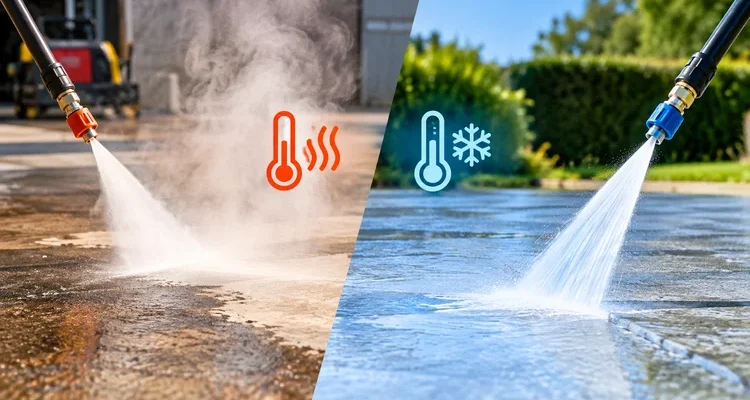
Heat helps break down oily and greasy contamination. In mechanical workshops, vehicle maintenance areas and other environments where oil and grease are the primary contaminants, hot-water cleaning can improve results over cold water alone — particularly when combined with an appropriate degreaser.
Hot-water cleaning is not necessary for every industrial cleaning job. On surfaces where the primary contamination is dust, dirt or organic growth, cold water is typically sufficient, and the additional equipment and running costs of hot-water cleaning don’t offer a meaningful benefit.
How to Choose the Right Cleaning Method
The decision between cold water, hot water, high-pressure and lower-pressure methods should start with a proper assessment of the site — not a default approach applied regardless of conditions.
Consider the type of contamination first (oil, dust, biological growth, general dirt), then the surface material and its condition, then the size and layout of the area. Pre-treatment requirements, wastewater management needs and any operational constraints should factor into the plan before equipment is selected. Our complete guide to pressure washing covers these decisions in broader detail.
How Often Should Warehouses and Workshops Be Pressure Washed?
Factors That Influence Industrial Cleaning Frequency
There’s no single cleaning schedule that works for every industrial property. A food distribution warehouse with smooth, sealed floors and a diligent internal cleaning programme has different requirements from a mechanical workshop that services heavy earthmoving equipment on bare concrete.
The factors that drive frequency include: the volume and type of vehicle movements, the nature of the industry and the contamination it generates, the level of foot traffic, exposure to dust and weather, proximity to the coast and the quality of the drainage. A facility with poor drainage that retains moisture will develop organic growth faster than a well-drained equivalent. A workshop that handles oily equipment daily needs floor cleaning more frequently than one involved in dry fabrication work.
Routine Maintenance Cleaning vs Deep Cleaning
There’s a useful distinction between routine maintenance cleaning — removing light contamination before it builds up — and more intensive deep cleaning designed to address accumulated grime that has been neglected for an extended period.
Facilities that clean regularly tend to find each clean easier and quicker. Contamination that’s removed before it has time to embed itself is far more manageable than contamination that’s been setting into concrete for years. Periodic inspections of high-use areas help identify when a deeper clean is warranted before the situation becomes difficult to address.
Signs Your Industrial Facility Needs Pressure Washing
The following are practical indicators that it’s time to schedule a clean:
- Visible oil or grease deposits on floors or hardstand surfaces that routine sweeping doesn’t address
- Persistent tyre marks and embedded grime in traffic areas and loading zones
- Mould or algae growth on exterior paths, walkways and external concrete
- Discoloured building exteriors, particularly on the weather-exposed sides
- Loading bays and dispatch areas that look heavily soiled or that attract complaints from delivery drivers
- Surface contamination that internal cleaning procedures no longer manage effectively
Creating a Practical Industrial Cleaning Schedule
A workable industrial cleaning schedule starts with identifying the areas of highest contamination and traffic — these typically need cleaning more frequently and justify dedicated planning.
Separate the requirements for indoor concrete floors, outdoor hardstands, exterior walls and loading areas — each has different contamination patterns and different constraints. Coordinate planned cleaning with maintenance shutdowns, stock takes and quiet operational periods where possible. Review the schedule based on actual results rather than fixed calendar dates — seasonal variation, operational changes and contamination levels should all influence the timing.
The Industrial Pressure Washing Process
Site Inspection and Surface Assessment
A proper site inspection before any industrial pressure cleaning job is not optional. The assessment needs to cover which surfaces are to be cleaned and whether they’re compatible with the proposed method, what types of contamination are present, the condition of the concrete or other surfaces, and any access restrictions, drainage arrangements and areas requiring special protection.
Identifying damaged concrete, delaminating coatings, exposed reinforcing steel, electrical hazards and equipment that can’t be moved or protected isn’t just about producing better cleaning results — it’s about avoiding making existing problems worse.
Preparing the Warehouse or Workshop
Effective preparation before industrial cleaning significantly affects the quality of the outcome. Vehicles, pallets, loose stock and portable equipment should be moved out of the cleaning area where practical. Fixed machinery and assets that can’t be moved need to be protected — typically with plastic sheeting, waterproof covers or other appropriate barriers.
Employees, contractors and other site users need to be notified of the cleaning schedule, access restrictions and exclusion zones. Wastewater collection and disposal arrangements need to be confirmed before cleaning begins — not after.
Selecting the Right Equipment and Cleaning Method
Pressure settings, water flow, nozzle selection and cleaning accessories all influence the result. Surface cleaner attachments are useful for large flat areas because they produce more consistent coverage than a standard lance and minimise the risk of uneven cleaning marks.
Pre-treatment products should be selected based on the specific contamination. The principle of using the lowest effective pressure for the surface applies throughout — starting lower and adjusting up as required is better practice than applying maximum pressure from the outset. For surfaces where high pressure risks damage, this step is critical. We cover whether pressure washing can damage concrete and brick in a separate article.
Cleaning the Surface Systematically
Working in controlled sections produces more consistent results across large areas and makes it easier to track which areas have been treated. Pre-treating stubborn stains before the main wash gives cleaning agents time to work rather than relying on pressure alone.
Maintaining appropriate nozzle distance and spray angle matters throughout. Too close and the risk of surface damage increases; too far and cleaning effectiveness reduces. Rinsing each section thoroughly and checking the result before moving on helps identify areas that need further attention.
Managing Wastewater and Final Rinsing
Wash water from industrial cleaning commonly contains oil, grease, detergents, sediment and other pollutants. This runoff cannot simply be directed into stormwater drains, particularly where oil, fuel or chemical contamination is present.
Depending on the nature of the contamination, wastewater may need to be collected and disposed of through an authorised waste management system. Requirements vary based on what’s in the water and applicable local regulations. Confirming these arrangements before the job is part of responsible industrial cleaning.
Checking drainage after rinsing — confirming it’s functioning correctly and that no standing water is pooling in areas where vehicles or pedestrians will be active — is the final step before any exclusion zones are removed.
Final Inspection and Reopening the Area
Before returning any cleaned area to normal use, a final inspection should confirm that visible contamination has been addressed, that drainage is functioning as expected and that no standing water remains. Any surface damage identified during cleaning should be noted for follow-up.
Surfaces need to dry sufficiently before vehicle movements, forklift traffic or foot traffic resumes. Wet concrete with any residual cleaning agent on it can be slippery. Removing barriers and reopening the area only when it’s genuinely safe is not a formality — it’s the point of having barriers in the first place.
Industrial Pressure Washing Safety Considerations
Protecting Workers and Site Visitors
Pressure washing equipment produces water jets at pressures that can cause serious injury. Appropriate personal protective equipment — eye protection, chemical-resistant gloves, hearing protection where required and non-slip footwear — should be worn throughout the job.
Active cleaning areas need to be clearly marked and physically separated from employees, visitors and unauthorised personnel. Flying debris dislodged by the pressure jet is a hazard even at some distance from the nozzle.
Preventing Slips, Trips and Falls
Water, loosened grime and cleaning residue create temporary slip hazards that extend beyond the immediate cleaning area. Hoses running across the site, pooling water in low points and wet surfaces that look dry are all common causes of slips during and after industrial cleaning.
Managing runoff direction, keeping hoses clear of walkways and ensuring pedestrian routes are appropriately redirected while surfaces remain wet reduces this risk. Drying time before reopening areas to normal traffic applies to both vehicle movements and foot traffic.
Protecting Electrical Systems and Machinery
Electrical installations, control panels, distribution boards, motors, bearings and any electronic equipment near cleaning areas require protection before washing begins. High-pressure water forced into an electrical enclosure, motor housing or building cavity can cause equipment failure, electrical hazards and ongoing moisture damage.
Isolating or physically protecting electrical equipment according to site procedures and manufacturer guidance is part of standard site preparation, not an optional extra.
Handling Cleaning Chemicals Responsibly
Degreasers and other cleaning products used in industrial pressure washing should be selected based on their compatibility with both the surface and the specific contamination. Following the product’s safety data sheet and handling instructions — including appropriate protective equipment, mixing procedures and environmental precautions — protects workers, the surrounding environment and the surfaces being cleaned.
Planning Around Forklifts, Trucks and Industrial Operations
Traffic management in warehouses, loading bays and workshop yards needs to be clearly planned before cleaning begins. Active vehicle movements and pressure washing operations cannot safely coexist without clear exclusion zones, communication between cleaning personnel and site management, and agreed procedures for when deliveries or vehicle movements need to pass through the area.
Scheduling cleaning around deliveries and production activities reduces conflicts and improves safety outcomes for everyone on site.
How to Prepare Your Industrial Property for Pressure Washing
Clear the Cleaning Area
Move vehicles, pallets, loose stock and portable equipment out of the area to be cleaned where practical. Equipment that can’t be moved — fixed conveyors, large machinery, structural fixtures — should be identified early so it can be adequately protected.
Confirm which areas can be temporarily taken out of service during cleaning. In some industrial operations this requires advance planning with production supervisors, warehouse managers or logistics coordinators.
Identify Sensitive Surfaces and Existing Damage
Walk the area to be cleaned before the job and identify any damaged concrete, deteriorating coatings, loose joints, cracks or other vulnerable areas. Point these out to the operator before cleaning begins — pressure washing over already-damaged concrete or a failing coating makes the problem worse.
Identify electrical equipment, ventilation points, door seals and other building components that require protection. If there’s been previous cleaning work that caused problems on a particular surface, discuss this with the operator before proceeding.
Plan Access, Water Supply and Drainage
Confirm that the site has adequate water access for the job and that the operator can position equipment to reach all areas efficiently. Identify drains, low points where wash water will accumulate and any drainage connections that may receive contaminated runoff. Establish how potentially contaminated wash water will be controlled before the job starts.
Schedule Cleaning to Minimise Disruption
Industrial cleaning produces better results and fewer operational complications when it’s scheduled thoughtfully. After-hours cleaning, quieter operational periods and planned maintenance shutdowns are all good candidates. Coordinating with warehouse staff, contractors, logistics providers and production teams in advance reduces the chance of cleaning conflicting with deliveries or critical operational activities.
Allow sufficient time for the cleaning, a final inspection and adequate drying before normal operations resume.
Common Industrial Pressure Washing Mistakes to Avoid
Using Excessive Pressure on Concrete and Building Surfaces
High pressure isn’t always better pressure. Excessive pressure on concrete can etch the surface, pit the paste matrix, damage mortar joints and strip coatings that the concrete was relying on for protection. Older concrete, weakened surfaces and previously damaged areas are particularly vulnerable.
Testing settings on an inconspicuous area and adjusting based on results is better practice than applying maximum pressure from the start. The goal is effective contamination removal, not maximum force.
Treating Every Stain the Same Way
Oil, rust, organic growth and general dirt respond to different treatments. Applying the same high-pressure, cold-water approach to every stain type produces inconsistent results and can leave certain contamination largely unchanged while unnecessarily stressing the surface.
Identifying what the stain actually is before deciding how to treat it — including whether pre-treatment is required and what product is appropriate — is the starting point for effective industrial concrete cleaning.
Ignoring Wastewater Runoff
Directing contaminated wash water into stormwater systems or allowing it to flow into surrounding areas is an environmental and regulatory risk. Oil-contaminated runoff reaching waterways has real consequences, and industrial cleaning jobs that generate significant contaminated water require appropriate containment and disposal planning.
This step needs to be thought through before cleaning begins, not addressed after the water is already moving.
Cleaning Around Unprotected Equipment and Stock
Water forced into electrical enclosures, under machinery covers or onto stored products can cause damage that far outweighs the benefit of a clean floor. Identifying and protecting vulnerable equipment and stock before cleaning starts is a basic preparation step that shouldn’t be skipped under time pressure.
Reopening Wet Areas Too Soon
Wet concrete with cleaning residue is a slip hazard. Wet electrical equipment is an electrocution risk. Wet paint, fresh degreaser residue and slippery biological growth that’s been loosened but not fully rinsed away all create hazards that persist for a period after cleaning finishes.
Confirming the surface is dry and safe before removing barriers and resuming normal traffic — vehicle or pedestrian — is the appropriate standard.
Waiting Until Grime Becomes Difficult to Remove
Contamination that’s been accumulating for years is harder to remove, more expensive to address and may have already caused surface damage that cleaning can’t reverse. Regular maintenance cleaning prevents heavy buildup and keeps the cost and effort of each clean manageable. An industrial facility that’s cleaned periodically is easier and less disruptive to maintain than one that requires a major intervention every few years.
Professional Industrial Pressure Washing vs DIY Cleaning
When In-House Cleaning May Be Sufficient
Internal cleaning procedures — sweeping, mopping and spot treatment — are appropriate for managing light surface contamination in accessible areas. For smaller floor areas, well-maintained surfaces and contamination that responds to standard methods, in-house cleaning is often adequate.
The limitations appear when heavy grease accumulation, large concrete areas, exterior building surfaces or complex wastewater management are involved. Most industrial-scale cleaning operations genuinely benefit from external assistance and appropriate equipment.
When to Consider Professional Pressure Washing
The following situations typically warrant professional warehouse floor cleaning or commercial pressure washing services:
- Large warehouse floors and extensive hardstand areas that in-house equipment can’t manage effectively
- Heavily contaminated workshop and vehicle maintenance areas, particularly those with significant oil and grease buildup
- Exterior building surfaces requiring specialist assessment or access planning
- Sites where wastewater management is a significant operational consideration
- Jobs where the appropriate cleaning method or surface compatibility is uncertain
- Facilities that need to maintain compliance with site standards, lease obligations or operational requirements
What to Consider When Comparing Cleaning Costs
The variables that affect industrial pressure washing costs include the size of the area, the severity of the contamination, access arrangements, required preparation, the cleaning method and equipment needed, wastewater management requirements and the amount of downtime the cleaning will require.
Comparing costs without accounting for all these factors is unreliable — a lower per-square-metre rate doesn’t account for a more heavily contaminated site that requires more time, more preparation and more involved wastewater handling. Requesting a site-specific quote rather than a generic rate gives a more accurate picture of the actual cost.
Recurring maintenance cleaning is also typically more cost-effective per clean than infrequent intensive work. The cumulative cost of three routine cleans spread over a year is usually lower than one intensive deep-clean addressing years of buildup.
Industrial Pressure Washing in Hervey Bay, Maryborough and the Fraser Coast
Maintaining Industrial Properties in Coastal Queensland
Industrial facilities in the Hervey Bay and Fraser Coast region operate in a coastal Queensland climate — high humidity, significant rainfall across the wet season, heat that accelerates organic growth and consistent salt exposure from proximity to the bay. Each of these factors affects how quickly surfaces accumulate contamination and how often they benefit from cleaning.
Biological growth on outdoor concrete, hardstands and building exteriors can develop quickly during summer in this climate. Salt deposits from coastal air accumulate on building facades and equipment over time. The combination of humidity and heat means mould and algae are rarely far from surfaces that aren’t regularly maintained.
Warehouses, workshops, commercial yards and industrial premises across the Fraser Coast deal with these conditions year-round. Cleaning frequency should reflect the site’s actual exposure and operating conditions rather than a generic schedule.
Pressure Washing Services for Local Businesses
CJS Machinery Hire’s commercial pressure washing for business properties covers suitable applications across warehouses, workshops, loading zones, hardstands and commercial building exteriors in Hervey Bay, Maryborough and surrounding Wide Bay communities.
The approach to each job is based on the surface material, the type of contamination and the site’s specific operational requirements. Selecting a cleaning method that suits the substrate and the contamination — rather than defaulting to maximum pressure — is central to producing good results without damaging surfaces or creating additional problems.
Choosing a Local Pressure Washing Provider
Working with a provider who understands local conditions — coastal exposure, Queensland humidity, the specific contamination challenges of the region — is worthwhile. They’re better placed to assess what a site actually needs and to plan the job around its real constraints.
Before requesting a quote, it’s worth discussing the scope of the job in detail: which surfaces need cleaning, the level of contamination, access limitations, any sensitive equipment or surfaces on site, and the operational schedule that the cleaning needs to work around. Knowing these details upfront means a more accurate quote and a better-planned clean.
Why Choose CJS Machinery Hire for Industrial Pressure Washing?
Practical Experience With Commercial and Industrial Environments
CJS Machinery Hire is a family-owned business based in Booral, with over 25 years of experience in construction and earthmoving across the Hervey Bay and Maryborough region. That background translates into a practical understanding of industrial site requirements — how to work around active operations, how to manage access and safety in busy environments and how to plan jobs that minimise disruption to the businesses they serve.
Cleaning Solutions Matched to the Surface
The surface and the contamination should drive the cleaning approach — not a standard procedure applied regardless of conditions. The difference between cleaning an oil-stained workshop floor and maintaining a painted render exterior is significant, and treating both the same way produces poor results on at least one of them.
Assessing the surface condition and the contamination type before selecting a method and pressure setting is the starting point for every industrial cleaning job. Appropriate technique — using the lowest effective pressure for the surface, pre-treating contamination that requires it and protecting sensitive areas — produces better outcomes with less risk of surface damage.
Services for a Range of Commercial Properties
CJS Machinery Hire’s pressure washing services extend to warehouses, workshops, industrial hardstands and commercial premises across the Fraser Coast. The scope of work for each job is discussed based on the site size, the nature of the contamination and the operational requirements of the business.
Businesses with specific constraints — limited shutdown windows, sensitive production areas, complex wastewater arrangements — are encouraged to discuss these before requesting a quote. Understanding these factors upfront allows the job to be planned appropriately.
Local Service Across the Fraser Coast
CJS Machinery Hire operates locally across Hervey Bay, Maryborough and surrounding areas. Businesses and property managers across the Wide Bay region are encouraged to get in touch to discuss their site and confirm whether CJS can accommodate their particular industrial cleaning requirements.
Frequently Asked Questions About Industrial Pressure Washing
What Is Industrial Pressure Washing Used For?
Industrial pressure washing is used to clean suitable hard surfaces in warehouses, workshops, factories, loading areas and industrial yards. Compatible concrete floors, hardstand areas, loading docks and building exteriors are common applications. The method uses high-pressure water — combined with appropriate cleaning agents and techniques — to remove surface contamination that routine cleaning can’t address.
Can You Pressure Wash a Warehouse Floor?
Compatible concrete warehouse floors can be pressure washed. The preparation required depends on the contamination type and level, the condition of the concrete, how drainage is arranged and what electrical equipment or stock is nearby. Heavily contaminated floors may need chemical pre-treatment before washing, and wastewater management arrangements need to be in place before the job starts.
Does Pressure Washing Remove Oil and Grease From Workshop Floors?
Pressure washing can remove oil and grease from workshop floors, but results depend on how long the contamination has been present and how deeply it has penetrated the concrete. Fresh oil with a suitable degreaser applied as pre-treatment responds well to pressure washing. Older, deeply embedded stains may improve significantly but may not disappear entirely, even with the best available treatment.
Is Hot Water Better for Industrial Pressure Washing?
Hot water can improve results on oily and greasy contamination. For cleaning workshop floors, vehicle maintenance areas and other environments where oil and grease are the primary contaminants, hot-water cleaning may be more effective than cold water alone. For general dirt, dust and organic growth, cold water with the correct technique and pressure is typically sufficient.
Can Industrial Pressure Washing Damage Concrete?
Excessive pressure on concrete can etch the surface, damage the paste matrix, pit older or weaker concrete and strip protective coatings or sealants. The risk increases with aged, deteriorating or previously damaged concrete. Using appropriate pressure settings for the surface — and testing before committing to a full-area clean — reduces the likelihood of damage significantly.
How Often Should an Industrial Building Be Pressure Washed?
Frequency depends on the type of business, the level of vehicle and foot traffic, the contamination generated by daily operations, proximity to the coast and the quality of drainage. There’s no universal schedule — a site-specific maintenance plan based on actual contamination levels and previous cleaning results is more reliable than a fixed time interval.
Can Pressure Washing Be Carried Out While a Warehouse Is Operating?
Some industrial cleaning jobs can be staged in isolated sections while operations continue elsewhere. However, active electrical hazards, vehicle movements, pedestrian access and the wastewater generated by cleaning all need to be carefully managed. For larger jobs or facilities where safe staging isn’t practical, cleaning during planned downtime, quiet periods or after hours produces better safety outcomes and usually better cleaning results.
How Is Wastewater Managed During Industrial Pressure Washing?
Wastewater management depends on the type of contamination present and applicable local requirements. Oily or chemically contaminated wash water must not be directed into stormwater drains or allowed to reach waterways. Depending on the level of contamination, collection, treatment and authorised disposal may be required. Confirming these arrangements before cleaning begins is part of planning the job correctly.
How Much Does Industrial Pressure Washing Cost?
Pricing depends on the size of the area to be cleaned, the type and level of contamination, access requirements, necessary preparation, the cleaning methods and equipment involved, wastewater management requirements and any operational constraints that affect scheduling. Requesting a tailored, site-specific quote rather than relying on a generic per-square-metre rate gives a more accurate picture of the actual cost.
Does CJS Machinery Hire Provide Industrial Pressure Washing in Hervey Bay and Maryborough?
CJS Machinery Hire provides pressure washing services across Hervey Bay, Maryborough and the surrounding Fraser Coast region. Visit our industrial pressure washing services page to discuss your requirements and confirm whether CJS can accommodate your particular industrial cleaning job.
Keep Your Warehouse, Workshop or Industrial Property Clean With CJS Machinery Hire
Regular industrial surface cleaning is an investment in the ongoing condition of your property. Accumulated dirt, grease, organic growth and surface contamination don’t just affect appearance — they can make surfaces harder to inspect, contribute to ongoing deterioration and create hazards that routine housekeeping can’t address.
Effective industrial pressure washing isn’t about applying maximum pressure and moving quickly. It’s about assessing the site properly, selecting the right cleaning method for the surface and contamination, managing wastewater responsibly, protecting sensitive equipment and reopening areas only when they’re safe. Done well, it supports the broader maintenance programme that keeps an industrial facility in good condition over time.
CJS Machinery Hire serves businesses across Hervey Bay, Maryborough and the Fraser Coast region, providing pressure washing for warehouses, workshops, industrial hardstands and commercial properties. If your facility is overdue for a clean — or if you’d like to set up a maintenance schedule that keeps contamination manageable — get in touch with CJS Machinery Hire or visit the pressure washing services page to discuss what your site needs.
Related Posts
Post a Comment