
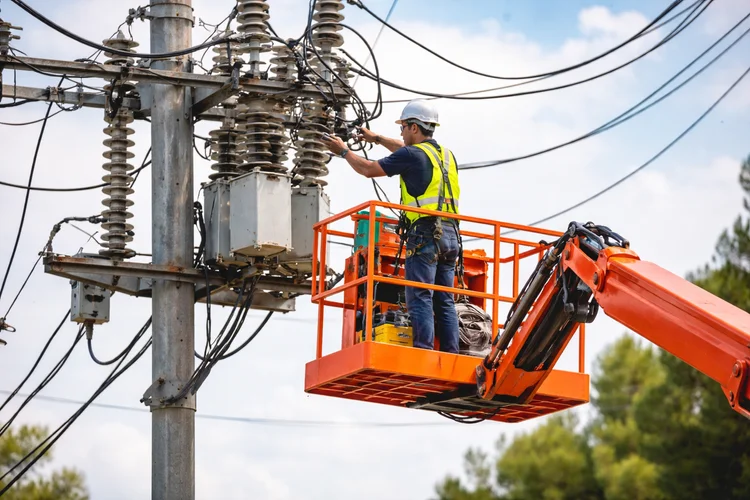
If you’re planning to operate a cherry picker or boom lift near power lines, you need to understand the risks before you even start the engine. Electrical hazards are one of the most serious dangers when working at heights, and they’re often invisible until it’s too late.
Whether you’re a tradie doing electrical work, a property owner tackling maintenance, or a contractor managing a site, this guide will walk you through the essential safety protocols for working around power lines with elevated work platforms in Queensland — so you can get the job done safely and within the law.
Working Around Power Lines
Why Power Line Safety Is Critical for Elevated Work Platforms
Power lines carry enough voltage to cause serious injury or death without even making direct contact. When you’re operating a cherry picker or boom lift, the elevated platform brings you closer to overhead hazards that most workers never have to think about. One mistake — a sudden swing, a gust of wind, or a misjudged distance — can result in electrocution, burns, or even fatalities.
In Queensland, electrical contact incidents involving elevated work platforms are preventable but far too common. Understanding how electricity behaves and knowing your clearance limits can save your life.
Common Risks When Operating Near Electrical Hazards
The dangers aren’t always obvious. Power lines can look dormant but still carry thousands of volts. Even if you don’t touch the line directly, electricity can arc through the air if you get too close. Other risks include:
- Swinging or extending the boom into the danger zone
- Wind pushing the platform closer to lines
- Metal equipment acting as a conductor
- Loss of control on uneven ground causing drift toward power lines
- Wet conditions increasing conductivity
Who This Guide Is For (Tradies, Contractors, Property Owners)
This guide is for anyone planning to operate or hire an elevated work platform near electrical infrastructure — electricians, painters, tree loppers, building inspectors, signage installers, and property managers. Even if you’re an experienced operator, a quick refresher on power line safety could be the difference between a routine job and a tragedy.
What Is an Elevated Work Platform (EWP)?
Definition and Types of EWPs (Including Cherry Pickers)
An Elevated Work Platform (EWP) is any machine designed to lift workers to heights for tasks that can’t be done safely from ground level. In Australia, EWPs include:
- Cherry pickers (articulating boom lifts)
- Straight boom lifts (telescopic)
- Scissor lifts
- Vertical mast lifts
- Trailer-mounted platforms
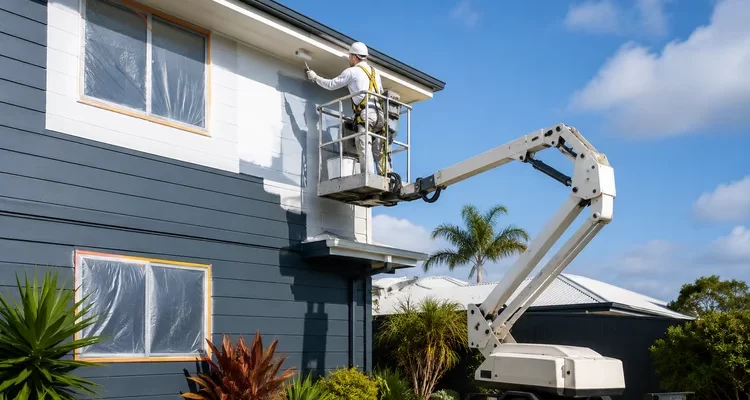
Each type has different reach, movement capabilities, and stability profiles. Cherry pickers are popular for their ability to reach up and over obstacles — ideal for working around buildings, trees, or awkward angles.
Key Features of a 13m Cherry Picker
A 13m cherry picker like the one available from CJS Machinery Hire is compact, mobile, and versatile. With a maximum working height of 13 metres, it’s perfect for:
- Reaching high facades, eaves, and rooflines
- Navigating tight spaces and uneven ground
- Providing a stable, enclosed platform with safety rails
- Articulating around obstacles without repositioning the base
Modern cherry pickers are designed with operator safety in mind, but they still require trained, licensed operators — especially when working near electrical hazards.
Typical Jobs That Require Working Near Power Lines
Many everyday tasks bring you uncomfortably close to power lines:
- Installing or repairing outdoor lighting and security cameras
- Painting multi-storey buildings or signage
- Tree trimming near streetlights or service lines
- Roof inspections and gutter cleaning
- Electrical and telecommunications work
- Antenna or solar panel installation
In all of these scenarios, planning ahead and following boom lift safety best practices is non-negotiable.
Understanding Power Line Hazards
How Electricity Can Arc Without Direct Contact
Here’s the critical part: you don’t have to touch a power line to be electrocuted. High-voltage electricity can jump through the air in an arc if you get too close. The higher the voltage, the further it can arc. This is why minimum approach distances exist — they’re not suggestions, they’re life-saving buffers.
If any part of your boom lift, platform, or body comes within the danger zone, electricity can flow through the machine, through you, and into the ground. Metal booms and platforms are highly conductive.
Voltage Levels and Their Associated Risks
Not all power lines carry the same voltage, but unless you’re trained to identify them, assume all lines are dangerous. Here’s a rough guide:
| Line Type | Voltage Range | Risk Level |
| Low voltage (LV) | Up to 1,000V | High risk of shock and burns |
| High voltage (HV) | 1,000V – 66,000V | Severe injury or death likely |
| Extra high voltage (EHV) | Above 66,000V | Instant fatality risk |
Even low-voltage lines can kill under the right conditions — especially in wet weather or if you’re grounded.
Environmental Factors That Increase Danger (Weather, Moisture, Wind)
Environmental conditions can make a risky job deadly. Wind can push your platform or boom closer to lines without you realising it. Rain, fog, or even high humidity increases conductivity, meaning electricity can arc across greater distances. Never operate an EWP near power lines during:
- Storms or high winds
- Rain or wet conditions
- Poor visibility (fog, dusk, darkness)
If conditions deteriorate while you’re working, stop immediately and reassess.
Australian Safety Standards and Regulations
Overview of Safe Work Practices in Queensland
In Queensland, workplace health and safety laws require employers and workers to eliminate or minimise risks when working near electrical infrastructure. This includes:
- Conducting risk assessments before starting work
- Maintaining safe distances from power lines
- Using exclusion zones and barriers
- Ensuring all operators are licensed and trained
- Communicating hazards clearly to the team
Worksafe Queensland and Energex provide detailed guidelines on working near electrical assets. Ignoring these can result in fines, prosecution, or worse.
Minimum Approach Distances for Power Lines
Safe approach distances vary depending on the voltage of the line. For most standard overhead lines in residential and commercial areas:
| Voltage | Minimum Distance |
| Up to 132,000V | 3 metres |
| 132,000V – 330,000V | 6 metres |
| Above 330,000V | Contact your electricity provider |
These distances apply to any part of the machine, platform, load, or worker’s body. If you’re unsure of the voltage, treat all lines as high voltage and maintain at least 3 metres clearance — or better yet, contact the local electricity provider to confirm.
Licensing Requirements for Operating Boom Lifts Over 11m
In Australia, operating a boom-type EWP with a platform height over 11 metres requires a High Risk Work Licence (HRWL) — specifically, the WP licence (boom-type). That means to legally operate a 13m cherry picker, you need:
- Current WP boom-type EWP licence
- Valid photo ID
- A working understanding of the equipment
- Site-specific safety training if required by the employer
If you’re hiring a cherry picker and don’t have the right licence, consider a wet hire option where an experienced operator comes with the machine.
Employer and Operator Responsibilities
Safety isn’t just the operator’s job. Under Australian WHS law:
Employers must:
- Provide safe equipment and training
- Conduct site risk assessments
- Ensure all staff are licensed and competent
- Implement exclusion zones and controls
Operators must:
- Follow safety procedures and site plans
- Maintain awareness of surroundings
- Refuse to operate in unsafe conditions
- Report hazards and near misses
Everyone on site shares responsibility for keeping the job safe.
Minimum Safe Distances from Power Lines
Safe Approach Distances Based on Voltage
As a rule of thumb, stay at least 3 metres away from any power line unless you know the exact voltage and have confirmed a different safe distance with the electricity provider. For transmission lines (the big ones on tall towers), keep at least 6 metres clearance.
These distances account for the potential arc, wind movement, and operator error. They’re not perfect clearances — they’re minimum safe buffers.
Why You Should Always Allow Extra Clearance
Three metres might sound like a lot, but when you’re operating a 13m boom lift, distances can be deceptive. From the platform, depth perception is harder, and the boom can drift or sway. Always give yourself extra room. If the legal minimum is 3 metres, aim for 4 or 5. It’s not overcautious — it’s smart.
Using a Spotter to Maintain Safe Distances
One of the best safety measures you can take is having a spotter on the ground. A spotter’s job is to:
- Monitor the boom’s position relative to power lines
- Communicate with the operator via two-way radio
- Stop work immediately if the platform drifts too close
- Watch for environmental changes (wind, obstacles)
Spotters provide an extra set of eyes and can see angles the operator can’t. Don’t skip this step, especially on complex sites.
Pre-Work Safety Planning
Conducting a Site Risk Assessment
Before you even book the cherry picker hire, walk the site. Identify all overhead hazards, including power lines, tree branches, building overhangs, and communication cables. Document:
- Location and height of power lines
- Voltage levels (if known)
- Ground conditions and access routes
- Emergency exits and assembly points
- Weather forecast for the work period
A proper risk assessment isn’t paperwork for the sake of it — it’s the foundation of a safe job.
Identifying Overhead and Hidden Electrical Hazards
Not all power lines are obvious. Some are hidden by tree canopies, tucked along rooflines, or buried under eaves. Look up and around before positioning your equipment. Check for:
- Service lines running from poles to buildings
- Sagging or damaged cables
- Guy wires that may be energised
- Underground cables near the base of poles
If you’re unsure, contact Energex or your local provider for a cable location service.
Establishing Exclusion Zones
Set up physical barriers or high-visibility tape to mark exclusion zones around power lines. No one — machinery, workers, or materials — should enter these zones. Exclusion zones are typically set at the minimum safe distance plus a buffer. Make them clear and enforce them.
Communicating Safety Plans with Your Team
Everyone on site needs to know the plan. Hold a toolbox talk before starting work. Cover:
- Location of power lines and exclusion zones
- Emergency procedures
- Role of the spotter
- Stop work authority (anyone can call a halt if they see danger)
Good communication can prevent accidents before they happen.
Safe Operation of Cherry Pickers Near Power Lines
Positioning the Equipment Safely
Set up your cherry picker as far from power lines as the job allows. Position the base so the boom has room to maneuver without swinging into danger zones. Never park directly under power lines, even if the boom is retracted.
Maintaining Stability on Uneven Ground
Cherry pickers rely on stable, level ground. On soft soil, gravel, or slopes, the base can shift — and even a small movement at ground level translates to metres of movement at the platform. Use outriggers properly, check ground conditions, and never exceed the platform’s tilt limits.
Avoiding Sudden or Awkward Movements at Height
Smooth, controlled movements are key. Jerky or sudden actions can cause the platform to swing toward power lines. Avoid:
- Rapid boom extensions or retractions
- Sharp directional changes
- Overreaching from the platform
- Operating in gusty wind
If the platform starts swinging, stop all movement and let it settle before continuing.
Importance of Staying Within Platform Limits
Every EWP has a safe working load (SWL) and platform capacity. Overloading the basket with workers, tools, or materials affects stability and control. Stick to the manufacturer’s limits — they’re there for a reason.
Personal Protective Equipment (PPE) for Electrical Safety
Essential PPE for Working at Heights
At a minimum, operators working near power lines should wear:
- Hard hat with chin strap
- High-visibility clothing
- Safety boots with insulated soles
- Full-body harness with lanyard (attached to platform anchor points)
This is standard height safety PPE and should be worn on every job.
Insulated Gloves and Protective Clothing
If you’re working within the minimum safe distance (under permit or with live line approval), you’ll need specialised electrical PPE, including:
- Insulated gloves rated for the voltage
- Arc-rated clothing
- Face shields and insulated sleeves
For most machinery hire jobs, you shouldn’t be this close. If you are, you need expert advice and additional safety controls.
Helmets, Harnesses, and Fall Protection
Even if electrocution isn’t the risk, falls are. Always wear a correctly fitted harness and attach your lanyard to the platform’s designated anchor point. Hard hats protect against falling debris or accidental head contact with the boom structure.
Emergency Procedures and What to Do If Contact Occurs
Immediate Steps If the Cherry Picker Contacts a Power Line
If your cherry picker makes contact with a power line:
- Stay in the platform. Do not exit. The machine may be energised, but the platform is often the safest place.
- Alert others. Shout or use your radio to warn everyone to stay away from the machine.
- Do not touch the boom or any metal parts.
- Call 000 immediately and request fire and ambulance services. Notify the electricity provider.
Staying Inside the Platform vs Exiting Safely
Generally, stay in the platform until emergency services arrive and confirm the power is isolated. However, if the machine is on fire or there’s an immediate life-threatening situation, you may need to jump clear. If you must exit:
- Jump as far from the machine as possible
- Keep your feet together
- Do not touch the machine and ground at the same time
- Shuffle away with small steps (keeping feet together) until you’re at least 10 metres clear
This is an extreme last resort.
Calling Emergency Services and Isolating the Area
Once contact occurs, the area becomes a live electrical hazard. Keep all personnel at least 10 metres away. Call 000, then contact the electricity provider (Energex in Queensland) to arrange de-energisation. Do not allow anyone to approach the machine.
First Aid for Electrical Injuries
Electrical injuries can cause burns, cardiac arrest, and internal damage. If someone is injured:
- Do not touch them if they’re still in contact with electricity
- Once it’s safe, check for breathing and pulse
- Begin CPR if needed
- Treat burns with cool water (no ice)
- Keep the person warm and calm until paramedics arrive
Electrical injuries often look less serious than they are. Always seek medical attention.
Training and Licensing Requirements
EWP Licence Requirements in Australia
To legally operate a boom-type EWP over 11m in Australia, you need a High Risk Work Licence (WP class – boom type). This involves:
- Completing an accredited training course
- Passing a practical assessment
- Holding a valid licence issued by your state or territory regulator
Licences must be renewed and kept current. Operating without one is illegal and dangerous.
Importance of Proper Operator Training
A licence proves you’ve met minimum competency, but real-world experience matters. Proper training teaches you how to:
- Recognise hazards before they become emergencies
- Operate smoothly and confidently at height
- Respond correctly in emergencies
- Understand equipment limitations
If you’re rusty or new to a particular machine, ask for a refresher. At CJS Machinery Hire, we’re happy to walk first-time operators through the basics.
When to Consider Wet Hire with an Experienced Operator
If you don’t have the right licence, or you’re working on a particularly complex or high-risk job, wet hire is a smart option. Wet hire means the equipment comes with a qualified operator who knows the machine inside out. It’s more expensive, but it eliminates training gaps and gives you peace of mind.
Common Mistakes to Avoid When Working Near Power Lines
Underestimating Clearance Distances
The most common mistake is thinking “I’ve got plenty of room” when you don’t. Distances look different from the platform, and booms can drift. Always measure, always double-check, and always allow extra space.
Ignoring Weather Conditions
Wind, rain, and storms don’t just make the job uncomfortable — they make it deadly. If conditions change, stop work. No deadline is worth a life.
Lack of Communication on Site
If the operator can’t hear the spotter or team members aren’t clear on the plan, accidents happen. Use radios, hand signals, or whatever works — but make sure everyone’s on the same page.
Using Poorly Maintained Equipment
Faulty controls, worn tyres, leaking hydraulics — these aren’t just maintenance issues, they’re safety hazards. Hire from a reputable provider who services their equipment regularly. At CJS Machinery Hire, our 13m cherry picker is serviced on schedule and safety-checked before every hire.
Benefits of Hiring a Reliable Cherry Picker
Safety Features of Modern Equipment
Today’s cherry pickers come with built-in safety features like:
- Tilt alarms and sensors
- Emergency lowering systems
- Overload protection
- Stabiliser interlocks
- Non-slip platform surfaces
These features only work if the equipment is maintained properly. Choose a hire company that takes servicing seriously.
Importance of Regular Servicing and Inspections
A well-maintained machine is a safe machine. Regular inspections catch problems before they cause accidents — hydraulic leaks, electrical faults, worn safety components. When you hire from CJS Machinery Hire, you’re getting equipment that’s been checked, serviced, and ready to work safely.
Flexibility for Short-Term and Long-Term Projects
Whether you need a cherry picker for half a day or a full week, flexible hire options make it easy to get the right equipment for the job. At CJS, we offer:
- Half-day and full-day rates
- Weekly discounts
- Pick-up or delivery ($180 fee)
It’s machinery hire that actually works for you — no fuss, no massive upfront costs.
Safe, Reliable Cherry Picker Hire in Hervey Bay and Booral
When you’re working near power lines, there’s no room for shortcuts. The right equipment, the right training, and the right planning can mean the difference between a job well done and a tragedy. Whether you’re an experienced operator or hiring a cherry picker for the first time, safety has to come first.
At CJS Machinery Hire, we’ve spent over 25 years in the construction and earthmoving industry, and we know what it takes to get a job done safely. Our 13m cherry picker is fully serviced, easy to operate, and built to meet Australian safety standards. We’re a family-owned business based in Booral, Hervey Bay, and we’re here to support local tradies, contractors, and property owners with honest advice and quality equipment.
If you’ve got a job that brings you close to power lines — or any elevated work that needs doing safely — get in touch with us today. We’ll make sure you’ve got the right gear and the knowledge to use it properly.
Don’t risk it. Hire smart, work safe, and get the job done right.
Related Posts
Post a Comment