
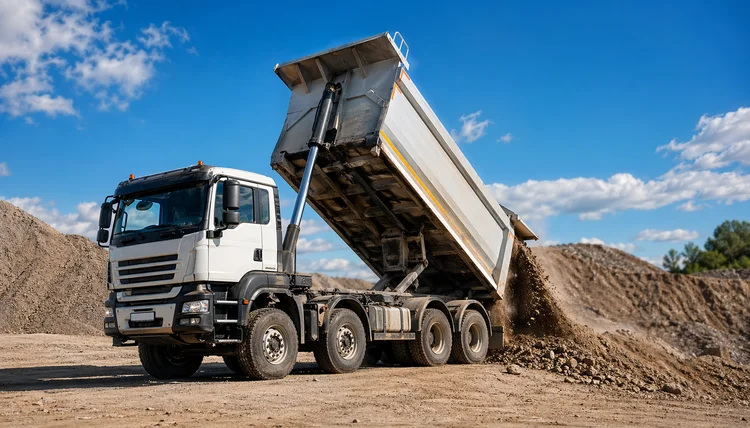
When you’re planning an earthmoving, landscaping, or construction project in Hervey Bay or the wider Queensland region, one of the first questions that comes up is: how much material can a tipper truck actually carry? Whether you’re moving soil, gravel, demolition rubble, or green waste, understanding cubic metre capacity helps you choose the right truck for the job — and avoid costly extra trips or hiring equipment that’s too big for your site.
In this guide, we’ll break down tipper truck capacities, explain what cubic metres really means, and help you work out exactly what size tipper truck hire you need for your project.
Quick Answer: Tipper Truck Capacity in Cubic Metres
Not all tipper trucks are created equal. Capacity varies widely depending on the truck’s size, body configuration, and legal weight limits. Here’s a quick reference guide:
| Truck Type | Typical Capacity |
| Small tipper trucks | 3–8 m³ |
| Medium tipper trucks | 8–15 m³ |
| Large tipper trucks | 16–20 m³ |
| Truck & dog combinations | Up to 30 m³ |
| B-double combinations | Up to 80 m³ |
The key takeaway? Capacity isn’t just about the size of the tray. It also depends on what you’re hauling, road regulations, and how efficiently you want to use each load.
What Does “Cubic Metres” Mean in Tipper Trucks?
Definition of Cubic Metres (m³)
A cubic metre is a unit of volume that measures three-dimensional space. In simple terms, it’s the amount of material that fits into a box measuring 1 metre long, 1 metre wide, and 1 metre high.
For tipper trucks, cubic metres tell you how much loose material — like soil, sand, gravel, mulch, or demolition waste — the tray can hold. It’s calculated by multiplying the length, width, and height of the truck’s body.
Volume vs Weight (Important Distinction)
Here’s where it gets important: cubic metres measure space, not weight. Tonnes measure weight.
A tipper truck might have a 10 m³ capacity, but that doesn’t mean it can carry 10 tonnes of material. Why? Because different materials have different densities.
- 1 cubic metre of sand weighs roughly 1.5–1.6 tonnes
- 1 cubic metre of gravel weighs around 1.7–1.8 tonnes
- 1 cubic metre of dry soil weighs about 1.3–1.5 tonnes
- 1 cubic metre of mulch weighs closer to 0.4–0.6 tonnes
This is why understanding both volume and weight matters when you’re hiring machinery for a job. You might be able to fit 10 m³ of mulch in the tray, but only 6 m³ of wet clay before hitting the truck’s legal weight limit.
Common Tipper Truck Sizes and Their Capacities
Mini / Small Tipper Trucks
Smaller tipper trucks typically carry between 2 and 6 m³. These are often ute-style tippers or compact single-axle trucks.
Best for:
- Residential landscaping projects
- Small site clean-ups
- Tight-access driveways or suburban streets
- Jobs where larger trucks can’t fit or aren’t needed
Standard Rigid Tipper Trucks
These are the workhorses of construction and earthmoving. A standard rigid tipper — like a 9-tonne Isuzu — can typically carry between 8 and 20 m³, depending on body size and configuration.
Best for:
- Medium to large construction sites
- Landscaping and garden supply deliveries
- Civil works and roadworks
- General material transport across regional areas
At CJS Machinery Hire, our 9-tonne Isuzu tipper truck falls into this category and is ideal for most jobs around Hervey Bay, Maryborough, and surrounding areas.
Truck and Dog Tipper
A truck and dog setup involves a rigid tipper truck pulling a second trailer (the “dog”). Combined, they can haul up to 30 m³ of material.
Best for:
- Bulk earthmoving
- Large civil construction projects
- Long-distance haulage of materials
- Jobs requiring serious volume without going to a B-double
B-Double and Road Train Tippers
These are the giants of the tipper world. B-doubles can carry up to 80 m³ and are commonly used in mining, major infrastructure projects, and interstate material transport.
Best for:
- Mining operations
- Major highway and infrastructure builds
- Long-haul material delivery across Queensland
For most residential, commercial, and even large-scale landscaping jobs in the Hervey Bay region, a standard rigid tipper will do the trick — no need to overcomplicate things.
Factors That Affect Tipper Truck Capacity
Truck Body Dimensions
The physical size of the tipper tray determines the base volume. Longer, wider, and deeper trays hold more material. However, bigger isn’t always better — especially if your job site has narrow access, low-hanging trees, or tight turning circles.
Material Type and Density
As we mentioned earlier, heavier materials like wet gravel or clay will max out a truck’s weight limit long before the tray is full. Lighter materials like mulch or shredded green waste can fill the entire tray without hitting weight restrictions.
Load Type (Level vs Heaped)
A level load sits flush with the top of the tray. A heaped load is piled higher, increasing volume. While heaped loads can boost capacity by 20–40%, they’re not always legal or safe — especially on public roads where load height is regulated.
Legal Weight Limits in Australia
In Australia, road transport is governed by strict weight regulations. The maximum allowable weight depends on:
- Gross vehicle mass (GVM)
- Axle configuration
- Road type and permits
A tipper truck might physically fit 12 m³ of material, but if that load exceeds the legal weight limit, you’ll need to reduce the volume or risk fines and safety issues. This is why understanding what a tipper truck is and how it works helps you plan smarter.
How to Calculate Tipper Truck Volume
Basic Formula
Calculating the volume of a tipper truck tray is straightforward:
Volume = Length × Width × Height
All measurements should be in metres to get cubic metres as the result.
Example Calculation
Let’s say you’re looking at a tipper with the following internal tray dimensions:
- Length: 4.5 metres
- Width: 2.3 metres
- Height: 1.2 metres
Volume = 4.5 × 2.3 × 1.2 = 12.42 m³
So this truck has a capacity of just over 12 cubic metres when level-loaded.
Why Real-World Capacity Differs
In practice, you won’t always get the full calculated volume. Here’s why:
- Spillage allowance — material can shift or fall during transport
- Load distribution — uneven loads affect tipping and handling
- Safety margins — operators often don’t fill right to the brim to avoid overloading or instability
It’s always smart to speak with your hire provider about realistic capacity for your specific material and job type.
Choosing the Right Tipper Truck for Your Project
For Small Jobs (Residential & DIY)
If you’re doing a backyard landscaping project, small retaining wall, or driveway upgrade, a mini tipper (2–6 m³) should be plenty. These trucks are easier to maneuver and cheaper to hire.
For Medium Construction Projects
Most construction sites, landscaping jobs, and civil works around Hervey Bay call for a standard rigid tipper in the 8–15 m³ range. This size balances capacity with practicality — you can haul serious volume without needing special permits or access arrangements.
For Large-Scale Earthmoving
Big developments, major subdivisions, or bulk haulage jobs might justify a truck and dog (20–30 m³) or even a B-double for mining and infrastructure work. However, these larger rigs require more planning around site access and road compliance.
Access and Site Conditions
Don’t forget to consider:
- Street width and turning space
- Overhead clearance (trees, powerlines, awnings)
- Ground conditions (soft soil, steep driveways)
- Proximity to neighbors (noise and dust)
Sometimes a smaller truck making two trips is smarter than trying to squeeze a larger tipper into a tight residential area.
How Many Cubic Metres Do You Actually Need?
Estimating Material Requirements
Before you book a tipper, work out how much material your job actually requires. Here are some rough estimates:
- Laying 100 mm of crusher dust over 50 m² = 5 m³
- Filling a garden bed 1.5 m × 3 m × 0.5 m deep = 2.25 m³
- Removing topsoil from a 10 m × 10 m area to 0.3 m depth = 30 m³
Many suppliers in the Hervey Bay area sell materials by the cubic metre, so knowing your volume helps you order the right amount and avoid waste.
Avoiding Underloading or Overloading
Underloading means you’re paying for a truck that’s only half-full — inefficient and costly. Overloading risks fines, safety hazards, and damage to roads or your site.
Getting the size right saves time, money, and headaches. If you’re unsure, talk to the hire company. At CJS Machinery Hire, we’re happy to help you work out what you need based on your job scope.
Tipper Truck Capacity vs Cost Efficiency
Why Bigger Isn’t Always Better
Hiring a massive tipper for a small job is like bringing a semi-trailer to pick up groceries. You’ll pay more, you might not be able to access the site, and you’ll waste capacity.
Larger tippers also:
- Cost more per day or per hour
- Require more experienced operators
- Have stricter site access requirements
- May need permits or escort vehicles in some areas
Reducing Trips with the Right Size
On the flip side, hiring a truck that’s too small means multiple trips — which adds up in fuel, time, and labor costs. The sweet spot is matching truck size to job size so you make the fewest trips without overcomplicating logistics.
For most jobs around Hervey Bay, Maryborough, and Bundaberg, a 9-tonne rigid tipper hits that sweet spot perfectly.
Frequently Asked Questions
How many cubic metres in a standard tipper truck?
A standard rigid tipper truck typically carries between 8 and 20 m³, depending on body size and configuration. Around Hervey Bay, a 9-tonne Isuzu tipper is common and usually handles 10–12 m³ comfortably.
What is the biggest tipper truck capacity?
The largest tipper trucks — B-doubles and road trains — can carry up to 80 m³. These are mainly used in mining and major infrastructure projects, not everyday construction or landscaping work.
Can I overload a tipper truck?
Legally, no. Overloading a tipper truck is a serious offense in Australia and can result in:
- Heavy fines for the driver and business
- Damage to roads and infrastructure
- Increased risk of accidents or rollovers
- Voided insurance coverage
Always check weight limits and load responsibly.
How many tonnes is 1 cubic metre?
It depends on what you’re hauling. Here’s a quick reference:
| Material | Approximate Weight per m³ |
| Sand (dry) | 1.5–1.6 tonnes |
| Gravel | 1.7–1.8 tonnes |
| Soil (dry) | 1.3–1.5 tonnes |
| Clay (wet) | 1.8–2.0 tonnes |
| Mulch | 0.4–0.6 tonnes |
| Concrete rubble | 1.5–1.7 tonnes |
This is why volume and weight need to be considered together when planning your hire.
Tipper Truck Hire in Hervey Bay with CJS Machinery Hire
At CJS Machinery Hire, we make tipper truck hire simple, affordable, and hassle-free. Our 9-tonne Isuzu tipper is ideal for construction, landscaping, and earthmoving projects across Hervey Bay, Torquay, Urangan, Maryborough, and surrounding areas.
Whether you’re clearing a site, delivering materials, or hauling away demolition waste, our tipper truck is clean, roadworthy, and ready to work.
We offer flexible hire options to suit your timeline:
- Daily hire: $250 per day
- Half-day hire: $150 for 4 hours
- Weekly hire: $1,400 per week (or $200/day for 7 days)
- Discounts for repeat customers and bookings over 3 days
- Optional delivery and pick-up for $150
All you need is a valid driver’s license, the appropriate machinery license, and a credit card. Prefer wet hire with a driver? Just ask — we’re here to make it easy.
As a family-owned business with over 25 years of experience in construction and earthmoving, we know what it takes to get the job done right. No fuss, no delays — just reliable machinery and honest local service.
Ready to book your tipper truck or need advice on what size you need? Get in touch with CJS Machinery Hire today. We’ll help you work out the right equipment for your job and have you sorted in no time. Let’s get that material moving.
Related Posts
Post a Comment