
If you’ve ever looked at a grimy driveway, a mould-streaked roof, or a weathered fence and thought “I just need a good hose-down” — you’re not alone. But when it comes to professional exterior cleaning, the method matters just as much as the equipment. Using the wrong approach on the wrong surface can leave you with damaged paint, etched concrete, or a roof that looks worse than before.
That’s why understanding the difference between pressure washing and soft washing is important before any cleaning job gets started. Both methods work — but they work for different surfaces, different types of contamination, and different outcomes. Here’s a straightforward breakdown of how each one works, when to use them, and how professionals decide between the two.
What Is Pressure Washing?
How Pressure Washing Works
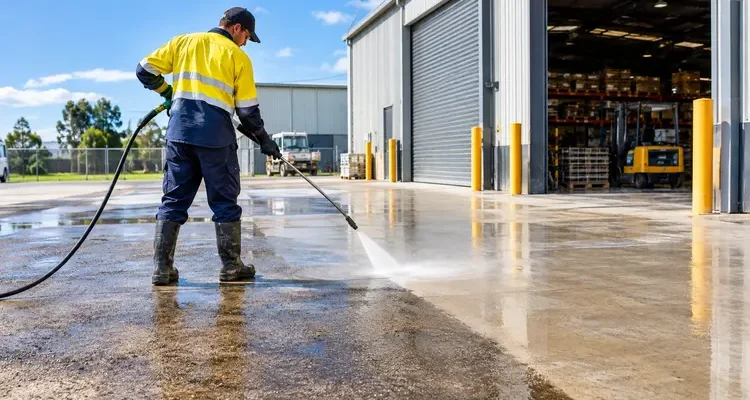
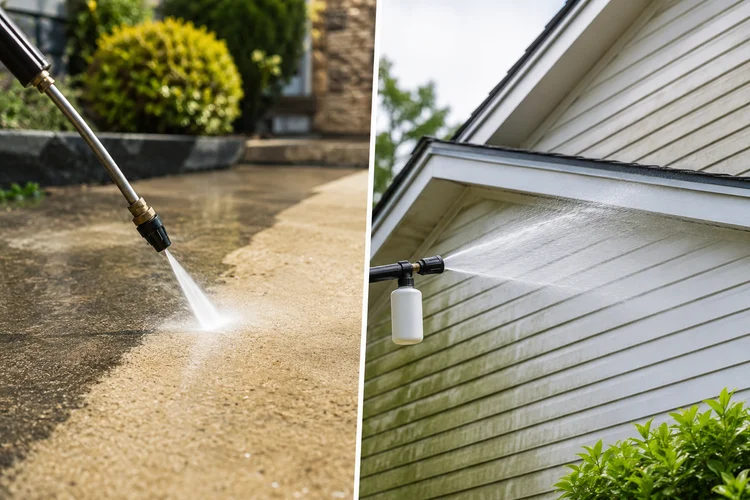
Pressure washing uses high-pressure water to blast away dirt, grime, mud, grease, mould, and stains from hard surfaces. The force of the water does the heavy lifting — mechanically dislodging and removing contaminants without the need for chemical treatment.
Water pressure for this method typically ranges from approximately 1,300 PSI on the lower end up to 4,000 PSI for heavy-duty commercial or industrial applications. The right pressure setting depends on the surface material and the type of contamination being removed.
Common Surfaces Suitable for Pressure Washing
Pressure washing is best suited for hard, durable surfaces that can handle high water pressure without damage:
- Concrete driveways
- Footpaths and walkways
- Pavers and paved entertaining areas
- Brick walls and garden walls
- Retaining walls
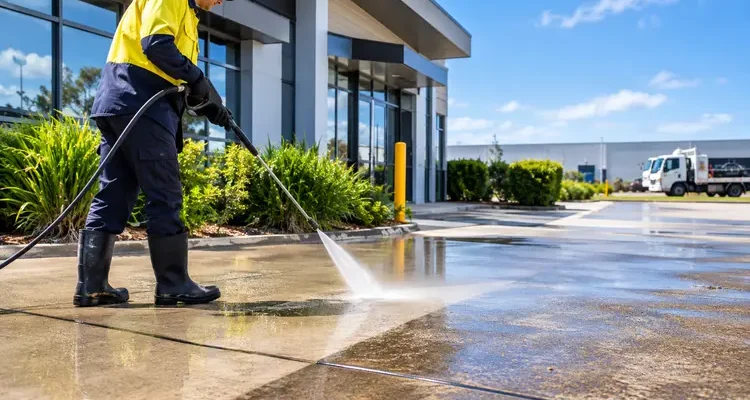
- Commercial hard surfaces
- Garage floors
- Industrial yards and loading areas
Benefits of Pressure Washing
- Fast, visible results — even on heavily soiled surfaces
- Removes stubborn stains like oil, tyre marks, and built-up grime
- Improves kerb appeal quickly
- Prepares surfaces for sealing, painting, or resurfacing
- Effective on large surface areas in a short time
Potential Risks of Pressure Washing
Pressure washing is powerful — and that’s exactly why it needs to be used correctly. On the wrong surfaces or with the wrong settings, it can:
- Strip paint from walls, fences, and other painted surfaces
- Damage or splinter timber
- Force water behind cladding or into wall cavities
- Etch softer materials like render, sandstone, or aged brick
- Cause surface scarring if the nozzle is held too close
These risks aren’t a reason to avoid pressure washing — they’re a reason to make sure it’s being done by someone who knows what they’re doing.
What Is Soft Washing?
How Soft Washing Works
Soft washing takes a different approach entirely. Instead of relying on high water pressure to remove contaminants, it uses low-pressure water combined with specialised cleaning solutions to treat surfaces at a biological level.
The detergents and treatment solutions do the work — breaking down and killing organic growth like mould, mildew, algae, moss, and lichen rather than just blasting it off. This is an important distinction: pressure washing removes visible growth, while soft washing treats the source.
Typical Pressure Levels Used
Soft washing operates at under 500 PSI — significantly gentler than conventional pressure washing. In many cases, the pressure is comparable to a garden hose, which makes it safe for surfaces that would be damaged by high-pressure equipment.
Common Surfaces Suitable for Soft Washing
Soft washing is the preferred method for any surface that’s either delicate, painted, or particularly susceptible to water damage:
- House siding and cladding
- Painted weatherboards
- Tile and Colourbond roofing
- Stucco and rendered walls
- Timber fences
- Flyscreens and window screens
- Outdoor furniture
- Decorative architectural features
Benefits of Soft Washing
- Significantly reduces the risk of surface damage
- Kills organic growth at the root rather than just removing visible signs
- Delivers longer-lasting results for algae and mould issues
- Suitable for delicate materials that pressure washing would damage
- Can reach difficult or awkward areas more effectively with low-pressure application
Pressure Washing vs Soft Washing: Key Differences
Cleaning Method
| Pressure Washing | Soft Washing | |
| Mechanism | Relies on high-pressure water | Relies on cleaning solutions |
| Action | Removes contaminants mechanically | Treats and kills biological growth |
| Primary agent | Water pressure (PSI) | Chemical treatment |
Water Pressure
| Pressure Washing | Soft Washing | |
| PSI range | 1,300 – 4,000 PSI | Under 500 PSI |
| Surface type | Durable, hard surfaces | Delicate or painted surfaces |
| Equipment | Pressure washer with high-PSI nozzles | Low-pressure applicator with chemical tank |
Best Applications
| Pressure Washing | Soft Washing | |
| Typical surfaces | Concrete, driveways, brickwork, pavers | Roofs, house exteriors, painted surfaces, timber |
| Best for | Dirt, grime, oil, grease, heavy staining | Mould, algae, lichen, mildew, biological growth |
Risk of Surface Damage
Pressure washing carries a higher risk of damage if used on the wrong surface or with incorrect settings — particularly on anything painted, rendered, or made from timber. Soft washing is generally the safer option for fragile or delicate surfaces because the low pressure won’t physically abrade or erode the material.
That said, soft washing solutions must also be selected carefully. The wrong detergent concentration on a sensitive surface can cause discolouration or chemical damage, which is another reason professional knowledge matters.
Longevity of Results
This is where soft washing has a clear advantage for organic growth: because it kills mould, algae, and lichen at the source rather than simply washing away the visible growth, results tend to last significantly longer. Pressure washing removes what you can see — but the biological organisms responsible for that growth often remain in the surface and return quickly. Soft washing eliminates them, giving surfaces a longer-lasting clean.
Which Surfaces Should Be Pressure Washed?
Concrete Driveways
Concrete is one of the most common pressure washing applications — and one of the most satisfying. High-pressure cleaning removes:
- Oil and grease stains
- Tyre marks
- Built-up dirt and surface grime
- Mould and algae from shaded areas
Concrete driveways in Hervey Bay and surrounds can accumulate a significant amount of grime between cleanings, particularly after wet season. A professional pressure wash restores the surface quickly and effectively.
Paved Areas
Pavers are well-suited to pressure washing, particularly for:
- Patio and outdoor entertaining areas
- Garden walkways
- Pool surrounds
Sand-set paver joints do require some care around pressure and angle to avoid washing out the jointing material, but this is something a professional operator accounts for.
Brick and Masonry
External brick walls, garden walls, and retaining structures respond well to pressure washing — removing built-up dirt, surface mould, and weathering. Pressure selection matters here: older or softer bricks require a lower PSI than modern hard-fired brick.
Commercial Hard Surfaces
Commercial and industrial sites often accumulate heavy contamination that requires proper high-pressure cleaning:
- Car parks and service areas
- Loading bays and docks
- Industrial yards
- Hardstand areas
These surfaces are built to handle it, and regular cleaning helps maintain safety, appearance, and compliance with site standards.
Which Surfaces Should Be Soft Washed?
Roof Cleaning
Roofs are almost always a soft wash job — whether you’re dealing with tile roofing, Colourbond, or other metal roofing materials. High-pressure washing on a roof can:
- Dislodge or crack roof tiles
- Damage or void warranties on Colourbond surfaces
- Force water under flashing and into roof cavities
Soft washing safely removes algae, lichen, and organic staining without any of these risks. It’s the industry-accepted method for roof cleaning in Australia.
House Exterior Cleaning
The exterior walls of most homes should be soft washed rather than pressure washed. This applies to:
- Painted weatherboards
- Vinyl and fibre cement cladding
- Rendered masonry walls
The gentle pressure protects the paint and surface finish while the cleaning solution removes mould, dirt, and biological growth effectively.
Timber Surfaces
Timber fences, pergolas, and decorative features require a careful approach. High pressure can raise the grain, splinter the surface, or drive water deep into the timber — causing swelling and long-term damage. Soft washing cleans the surface without physically abusing the material.
Delicate Architectural Features
Decorative trims, window surrounds, heritage features, and outdoor fixtures all benefit from low-pressure application. These elements are often easier to damage than they look, and soft washing lets you clean them thoroughly without the risk.
Common Mistakes Property Owners Make
Using Pressure Washing on Delicate Surfaces
This is probably the most common — and costly — mistake. Roof damage, paint stripping, and timber erosion are all avoidable outcomes when the wrong method gets applied to the wrong surface. A power washer in the hands of someone who hasn’t assessed the surface properly can cause hundreds or thousands of dollars in damage.
Choosing Soft Washing for Heavy Surface Stains
The flip side is equally true. Oil stains on a concrete driveway aren’t going to shift with a low-pressure rinse and some detergent. Some contaminants require the mechanical force of pressure washing to be removed effectively. Soft washing in this context produces underwhelming results and wastes time.
Assuming One Method Fits Every Job
Most professional exterior cleaning projects don’t use a single method across the entire property. The driveway gets pressure washed; the house exterior gets soft washed; the fence might need a combination of both. Good results come from matching the method to the material.
Hiring Inexperienced Operators
Pressure and soft washing look simple from the outside — but getting the details right requires real knowledge. Pressure settings, nozzle selection, detergent concentration, dwell time, water temperature, and surface compatibility all affect the outcome. An inexperienced operator can damage surfaces, leave patchy results, or use cleaning solutions that harm landscaping or surrounding materials.
How Professionals Decide Between Pressure Washing and Soft Washing
Surface Material Assessment
The first question any professional asks is: what are we cleaning? Hard, non-porous surfaces like concrete and brick can generally handle high pressure. Painted, rendered, timbered, or delicate surfaces should be soft washed. This assessment happens before equipment is even set up.
Type of Contamination Present
Different contaminants respond to different treatments:
- Organic growth (mould, algae, lichen, mildew) → soft washing with appropriate biocidal solutions
- Dirt, grime, and general weathering → pressure washing or a combination approach
- Oil and grease → pressure washing, often with a pre-treatment degreaser
- Rust stains → specialist treatment products, usually applied at low pressure
Desired Outcome
What the client wants to achieve also shapes the approach:
- Surface restoration after years of neglect
- Mould treatment and long-term prevention
- Pre-sale or pre-paint surface preparation
- Ongoing maintenance cleaning
Each scenario may call for a different balance of pressure and chemical treatment.
Safety Considerations
Professionals also factor in what’s around the surface being cleaned:
- Protecting established gardens and lawn areas from chemical runoff
- Preventing water intrusion into wall cavities or roofing
- Avoiding unnecessary wear on surrounding materials
- Ensuring runoff is managed appropriately, particularly on commercial sites
Can Pressure Washing and Soft Washing Be Used Together?
Absolutely — and this is how most complete property cleans actually work.
Why Many Professional Services Use Both Methods
A full exterior property clean often combines both techniques to get the best result across every surface:
- Soft wash the house exterior and roof
- Pressure wash the driveway, paths, and hardstand
- Achieve a complete property refresh without compromising any surface
This approach is more efficient and produces better outcomes than trying to apply a single method across the whole property.
Typical Residential Cleaning Packages
A comprehensive residential pressure washing service might include:
- House wash (soft wash)
- Roof clean (soft wash)
- Driveway cleaning (pressure wash)
- Patio and paved area cleaning (pressure wash)
- Fence cleaning (soft wash or combination)
The right provider will assess each surface and apply the right method — not just run the same equipment over everything.
Commercial Property Applications
Commercial properties often have a wider mix of surfaces to deal with:
- Building facades (typically soft wash)
- Footpaths and car parks (pressure wash)
- Outdoor common areas and furniture (soft wash or combination)
For body corporates, commercial landlords, or business owners managing a site presentation, combining both methods gives consistent results across the whole property.
Signs Your Property Needs Professional Exterior Cleaning
It’s not always obvious when a property needs attention — until it really is. Watch for:
- Green algae or mould growth on walls, fences, or paths
- Black streaks on roofing (a classic sign of lichen or algae)
- Driveways that look dull or stained despite regular rain
- Slippery pathways — a safety issue, not just a visual one
- Weather-stained or discoloured exterior walls
- An overall drop in kerb appeal that’s hard to pinpoint
Most of these issues don’t resolve themselves. Rain doesn’t remove established mould or organic growth — it often makes it worse. Professional cleaning addresses the problem properly rather than just delaying it.
Why Choose Professional Pressure Washing Services?
Better Equipment and Expertise
Professional pressure washing operators bring more than just the gear. They bring the knowledge to use it correctly:
- Selecting the right pressure for each surface
- Choosing the appropriate cleaning solutions
- Applying correct dwell times and techniques
- Identifying risks before they become problems
The difference between a professional result and a DIY job is often the expertise behind the equipment, not the equipment itself.
Protecting Your Property
Using the right method matters from a financial perspective too. Damage caused by incorrect pressure washing — stripped paint, cracked tiles, swollen timber — can be expensive to repair. A professional approach reduces these risks significantly and delivers more effective cleaning outcomes at the same time.
Long-Term Value
Regular professional exterior cleaning isn’t just cosmetic — it’s maintenance. Clean surfaces last longer. Mould and biological growth that’s left untreated can degrade paint, timber, and surface coatings over time. Staying on top of it protects your investment and keeps the property looking its best year-round.
If you’re looking for professional exterior cleaning, learn more about our pressure washing services and how we can restore driveways, pathways, commercial surfaces, and other outdoor areas. You can also visit our complete guide to pressure washing for a deeper look at what’s involved.
Get the Right Exterior Clean from CJS Machinery Hire
At CJS Machinery Hire, we’re a family-owned business based in Booral, Hervey Bay — and we’ve been getting jobs done properly for the local community for over 25 years. Our pressure washing service covers residential and commercial properties across Hervey Bay, Maryborough, and surrounding regions, using the right method for every surface.
Whether your driveway needs a heavy-duty pressure wash, your roof needs a careful soft wash, or you’ve got a commercial property that needs a full exterior refresh — we’ll assess the job, use the right approach, and deliver results that actually last.
Don’t let grime, mould, or algae keep building up. Get in touch with the team at CJS Machinery Hire today and let’s talk about what your property needs. We’ll make it straightforward — no jargon, no overcomplicated quotes, just honest advice and a solid clean.
Related Posts
Post a Comment