
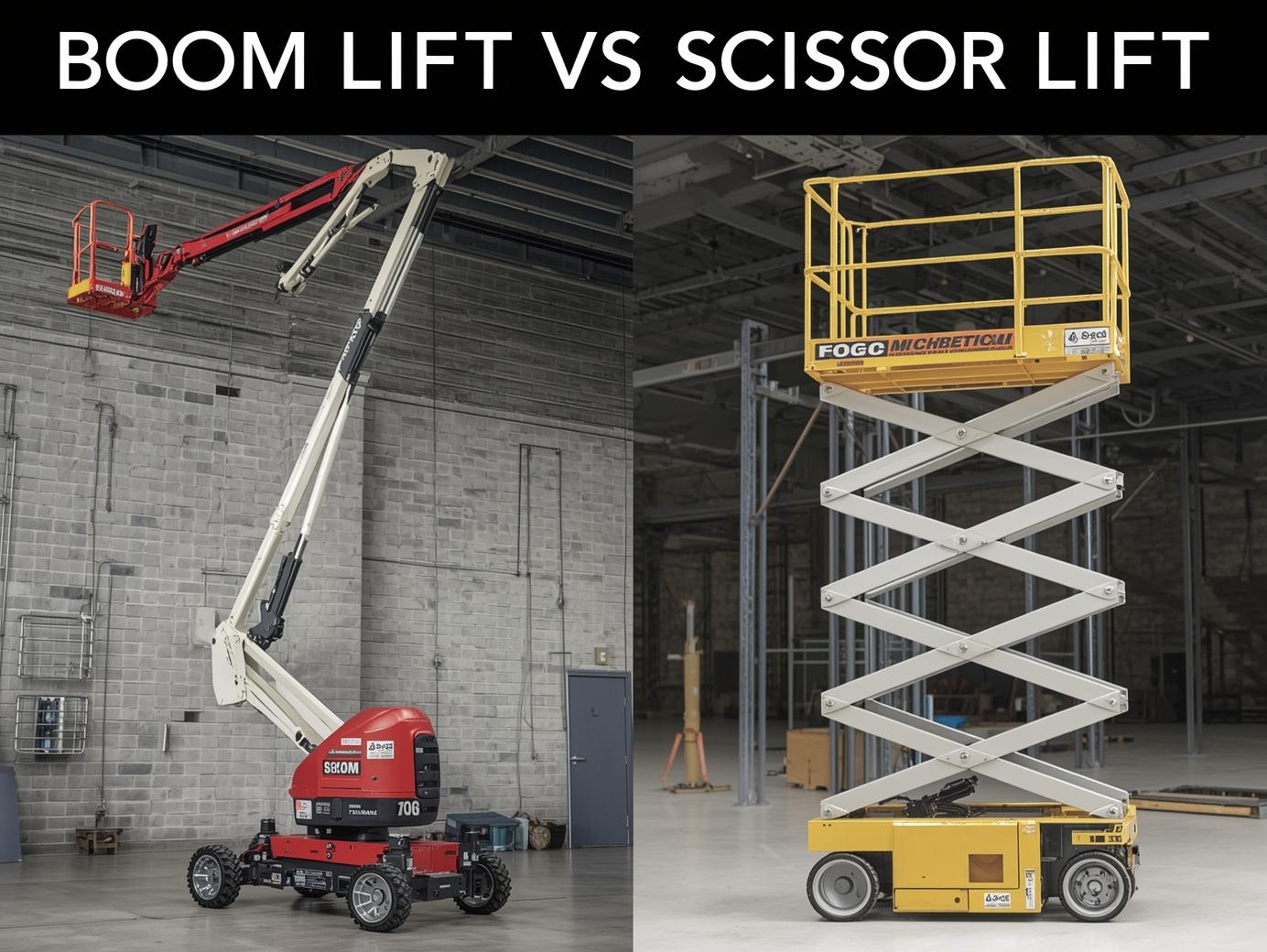
When you need to work at height, choosing the right equipment can make all the difference between a job done safely and efficiently, or one that’s unnecessarily complicated and risky. Two of the most common options for elevated access are boom lifts and scissor lifts, but they’re designed for very different purposes.
If you’ve ever found yourself wondering which one suits your project, you’re not alone. Many homeowners, tradies, and contractors across Hervey Bay and Maryborough face this same question when planning their work. While both machines get you up high, understanding their unique capabilities will help you pick the right tool for the job – and potentially save you time, money, and hassle.
In this guide, we’ll break down exactly what boom lifts and scissor lifts are, how they differ, and which one is best suited to your specific needs. Whether you’re installing signage, maintaining gutters, painting a multi-storey building, or working on a construction site, we’ll help you make an informed choice.
What Is a Boom Lift?
A boom lift is an aerial work platform that uses a hydraulic arm (the boom) to lift workers and their equipment to elevated positions. The key feature of a boom lift is its ability to extend both vertically and horizontally, allowing you to reach up and over obstacles like buildings, trees, or machinery.
Unlike other types of elevated work platforms, boom lifts offer exceptional flexibility in positioning. You can maneuver the platform to access hard-to-reach spots that would be impossible with a straight vertical lift, making them invaluable for complex jobs where access is challenging.
How a Boom Lift Works
The boom lift operates through a series of hydraulic cylinders that control the arm’s movement. The operator stands in a platform or basket attached to the end of the boom and uses controls within the basket to move it up, down, and sideways. The base of the machine remains stationary while the boom extends and articulates, giving you precise control over your working position.
Most boom lifts can rotate a full 360 degrees, and the articulating arm can bend at one or more joints to navigate around obstacles. This makes them incredibly versatile for jobs where you need to work over walls, around corners, or above large equipment.
Common Types of Boom Lifts (Including Cherry Pickers)
There are several types of boom lifts available, each designed for specific applications:
Telescopic Boom Lifts feature a single straight arm that extends like a telescope, providing maximum height and reach. They’re ideal for jobs requiring significant vertical height in outdoor environments.
Articulating Boom Lifts (often called knuckle booms) have multiple joints in the arm that allow the platform to bend and reach up, over, and around obstacles. These are perfect when you need to navigate complex structures or work in tight spaces.
Cherry Pickers are essentially smaller, more compact boom lifts that are particularly popular for cherry picker hire projects. The term “cherry picker” originally referred to the platforms used for fruit picking, but it’s now commonly used to describe any small to medium boom lift. They’re excellent for residential work, tree maintenance, and light commercial tasks.
Towable Boom Lifts are smaller units that can be towed behind a vehicle, making them easy to transport between job sites without requiring a truck or trailer.
Typical Uses for Boom Lifts
Boom lifts excel in situations where you need to reach over or around obstacles. Common applications include:
- Tree trimming and pruning where you need to navigate through branches
- Gutter cleaning and roof maintenance on multi-storey buildings
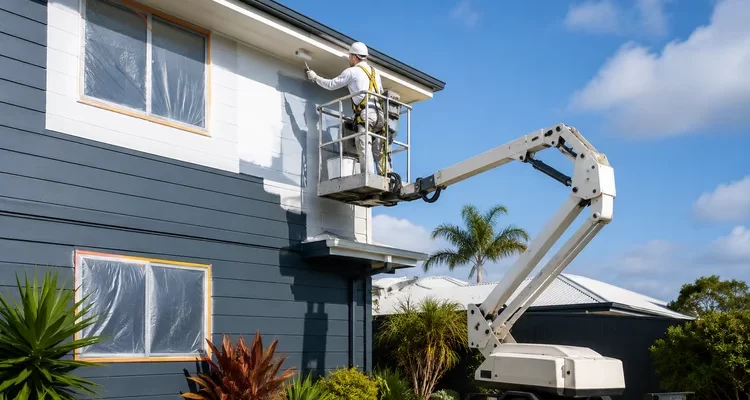
- External building repairs and painting where you need to move around the structure
- Installing outdoor lighting, cameras, or antennas on tall poles or building edges
- Signage installation on shop fronts or commercial buildings
- Electrical work on overhead power lines or street lighting
- Construction work requiring access to awkward angles or elevated positions
Key Advantages of Boom Lifts
The primary advantage of a boom lift is its reach and flexibility. You can position the platform exactly where you need it, even if there are obstacles in the way. This makes jobs faster and safer because you’re not constantly repositioning equipment or taking risky shortcuts.
Boom lifts also offer excellent outreach, meaning you can work at a significant horizontal distance from the base of the machine. This is crucial when the ground directly below your work area is inaccessible or when you’re working over buildings, equipment, or landscaping that can’t be disturbed.
The ability to rotate and articulate means you can often complete an entire job from one position, rather than having to move the machine multiple times. This saves considerable time on larger projects.
Limitations of Boom Lifts
While boom lifts are incredibly versatile, they do have some drawbacks. The platform or basket is typically smaller than a scissor lift platform, which means less working space for materials and tools. If you need to carry large sheets of plasterboard or extensive equipment, you might find the space limiting.
Boom lifts generally require more ground space to operate safely, particularly when the boom is fully extended. The machine needs to remain stable, so uneven terrain can be problematic. Many boom lifts also have lower weight capacities compared to scissor lifts.
What Is a Scissor Lift?
A scissor lift is an aerial work platform that moves straight up and down using a crisscross (scissor-like) mechanism. Unlike boom lifts, scissor lifts provide purely vertical movement, with no ability to extend horizontally beyond the base of the machine.
The design of a scissor lift makes it ideal for jobs where you need a stable, spacious platform directly above the machine’s footprint. They’re commonly used in warehouses, construction sites, and maintenance work where the work area is directly overhead.
How a Scissor Lift Works
The scissor mechanism consists of linked supports in an X-pattern that fold and unfold to raise and lower the platform. Hydraulic, pneumatic, or mechanical systems power this movement, extending the supports to lift the platform vertically. The entire platform rises as a single stable unit, maintaining a level working surface throughout the lift.
Controls are located on the platform itself, allowing the operator to raise, lower, and (in mobile models) drive the lift while elevated. The base of the scissor lift remains on the ground, and the platform moves only in a vertical plane.
Common Types of Scissor Lifts
Electric Scissor Lifts are powered by batteries and are designed for indoor use. They’re quiet, produce no emissions, and work well on smooth, level floors. These are the go-to choice for warehouse work, retail environments, and any indoor maintenance tasks.
Rough Terrain Scissor Lifts feature larger tires, more ground clearance, and diesel or dual-fuel engines. They’re built for outdoor construction sites, uneven ground, and rugged conditions where electric models would struggle.
Compact Scissor Lifts are smaller units designed for tight indoor spaces with limited ceiling heights. They’re perfect for residential work or small commercial jobs where full-size equipment won’t fit.
Typical Uses for Scissor Lifts
Scissor lifts are the preferred choice for:
- Warehouse maintenance and inventory management
- Indoor construction work like ceiling installation, plastering, and painting
- HVAC installation and maintenance
- Electrical work in commercial buildings
- Retail store maintenance and display setup
- Factory maintenance and equipment servicing
- Installing or maintaining lighting in large indoor spaces
- Any job requiring a stable platform for two or more workers
Key Advantages of Scissor Lifts
The biggest advantage of a scissor lift is its large, stable platform. You’ll have plenty of room to work, store materials, and move around comfortably. Many scissor lifts can accommodate multiple workers at once, which can significantly speed up jobs requiring teamwork.
Scissor lifts are generally easier to operate than boom lifts, making them more accessible for workers who don’t have extensive training. The controls are straightforward, and there’s no need to manage complex boom movements.
They typically offer higher weight capacities than boom lifts, allowing you to carry more tools and materials on the platform. This reduces the number of trips up and down, improving efficiency.
Electric scissor lifts are particularly well-suited for indoor environments because they’re quiet, emission-free, and won’t damage finished floors.
Limitations of Scissor Lifts
The main limitation of a scissor lift is its lack of horizontal reach. You can only work directly above the machine’s footprint, which means you’ll need clear ground access directly below your work area. If there are obstacles, walls, or machinery in the way, a scissor lift won’t be able to reach over or around them.
Scissor lifts require relatively flat, stable ground to operate safely. Rough terrain models can handle some unevenness, but they still need more level ground than boom lifts. The larger footprint also means they may not fit in tight or narrow spaces.
For outdoor work, scissor lifts can be affected by wind more than boom lifts because of their larger platform area. This can limit their use on particularly windy days or at extreme heights.
Boom Lift vs Scissor Lift: Side-by-Side Comparison
Understanding the practical differences between these two machines will help you decide which one suits your project best. Here’s how they stack up against each other across the key factors that matter most on the job.
Working Height and Reach
Boom lifts typically offer greater maximum heights than scissor lifts, with some models reaching 40 meters or more. However, their real advantage is outreach. A boom lift can extend horizontally 15-20 meters or more from its base, meaning your total working area is far larger.
Scissor lifts generally max out at around 15-20 meters in height, though most commonly hired models reach 8-12 meters. They offer zero horizontal reach beyond the platform edges, so your working area is limited to the space directly above the base.
For tasks requiring extreme height or distance from the base, boom lifts win. For straightforward vertical access up to moderate heights, scissor lifts are perfectly adequate and often more practical.
Horizontal vs Vertical Access
This is perhaps the most critical difference. Boom lifts can move both horizontally and vertically, positioning the platform wherever you need it within their operating envelope. This three-dimensional movement is essential for working around obstacles, over buildings, or in complex environments.
Scissor lifts move only vertically. While the platform is much larger, you’re limited to working directly above where the machine is positioned. This makes them ideal for open areas where you have clear ground access but unsuitable for jobs requiring reach over obstacles.
Indoor vs Outdoor Applications
Electric scissor lifts are the gold standard for indoor work. They’re quiet, clean, and compact enough to navigate through doorways and corridors. They won’t damage finished floors and can operate in enclosed spaces without ventilation concerns.
Boom lifts are primarily outdoor machines, though smaller models can be used indoors in large open spaces like warehouses or aircraft hangars. Their narrower footprint and ability to reach over obstacles make them better suited for outdoor construction, tree work, and external building maintenance.
Rough terrain scissor lifts bridge the gap for outdoor work on construction sites, but they still need relatively level ground and can’t navigate obstacles like boom lifts can.
Stability and Platform Space
Scissor lifts provide a rock-solid, spacious platform that doesn’t sway or bounce. Multiple workers can move around freely, and you can store plenty of materials without worrying about space. The stability makes them ideal for precision work or tasks requiring two or more people.
Boom lift platforms are smaller and can experience some movement, particularly in windy conditions or when the boom is fully extended. This doesn’t make them unsafe when properly operated, but it does require more awareness and can be unsettling for workers who aren’t used to height.
Ease of Transport and Setup
Scissor lifts, particularly compact and electric models, are relatively easy to transport and set up. Many can fit through standard doorways and can be quickly moved into position. Setup is straightforward, requiring mainly a level surface and basic safety checks.
Boom lifts, especially larger models, often require truck transport and can take longer to set up. You’ll need to ensure adequate clearance around the machine for the boom to operate, and the setup requires more attention to ground conditions and stability.
Towable boom lifts are an exception, offering easier transport for smaller jobs, but they still require more operational knowledge than scissor lifts.
When Should You Choose a Boom Lift?
Understanding when a boom lift is the right choice will save you from hiring the wrong equipment and dealing with job delays or safety risks. Here are the scenarios where boom lifts excel.
Jobs That Require Outreach Over Obstacles
If you’re working around buildings, over machinery, or through tree canopies, a boom lift is essential. The ability to position the platform away from the base means you can work in areas that would be completely inaccessible with a scissor lift.
Examples include painting the upper floors of a building while standing in the car park, trimming trees without parking directly underneath them, or accessing the far side of a warehouse roof from the ground level.
Elevated Access in Tight or Awkward Areas
Articulating boom lifts can navigate through tight spaces and around corners, making them ideal for work in congested areas. If you’re working in a backyard with limited access, between buildings, or in urban environments where ground space is restricted, the boom lift’s compact base and flexible reach are invaluable.
The ability to drive the boom lift into position and then extend it to reach your work area means you can set up in one spot and access a wide working envelope without constantly repositioning.
Situations Where a Cherry Picker Is the Better Option
For residential work, light maintenance, and jobs requiring moderate heights with some horizontal reach, cherry picker hire offers the perfect middle ground. Cherry pickers are more maneuverable than full-size boom lifts but still provide the reach and flexibility you need for most home and light commercial tasks.
They’re particularly popular for holiday decorating, where you need to safely access rooflines, eaves, and tall trees to install lights and decorations. The compact size makes them easy to navigate around residential properties without damaging lawns or landscaping.
When Is a Scissor Lift the Better Choice?
Scissor lifts shine in specific situations where their stability, platform size, and straightforward operation provide clear advantages.
Vertical Access for Flat, Level Surfaces
When your work area is directly above accessible ground and you don’t need horizontal reach, a scissor lift is the smarter choice. The large platform gives you room to work comfortably, and the stability allows for precision tasks without worry.
This is perfect for indoor maintenance work, ceiling installations, or any job where you’re working on flat, finished surfaces like polished concrete or tiles that could be damaged by heavier or less stable equipment.
Warehouse, Construction, and Maintenance Tasks
In warehouses, scissor lifts are the workhorse for accessing high shelving, performing inventory counts, and maintaining lighting or HVAC systems. The ability to carry substantial loads and accommodate multiple workers makes them ideal for efficiency-focused operations.
On construction sites, scissor lifts excel at interior work where you need a stable platform for drywall installation, electrical rough-in, or ceiling work. The large platform means less time going up and down to fetch materials.
Projects That Need a Larger Work Platform
When your job requires two or more workers to collaborate at height, or when you need to store bulky materials on the platform, the scissor lift’s spacious deck is essential. Jobs like ceiling panel installation, large-scale painting, or commercial lighting setups benefit enormously from having room to spread out.
The stability also makes them safer and more comfortable for workers who will be spending extended periods at height. There’s less movement and bounce, reducing fatigue and allowing for more precise work.
Boom Lift vs Scissor Lift for Construction Projects
Different trades and construction scenarios call for different equipment. Understanding which lift works best for specific construction applications will help you plan more efficiently.
Trade-Specific Use Cases
Electricians often prefer scissor lifts for indoor electrical rough-in work where they need a stable platform to run conduit, install junction boxes, and wire light fixtures across large ceiling areas. For external work on power poles or awkward commercial installations, boom lifts provide the necessary reach and positioning.
Painters generally favor scissor lifts for large flat surfaces like warehouse ceilings or the interiors of commercial buildings, where the spacious platform allows them to work with rollers, sprayers, and material without constant repositioning. For exterior painting, particularly on multi-storey buildings with eaves, balconies, or architectural features, boom lifts offer the flexibility to reach every surface.
Plumbers and HVAC technicians working on rooftop units often need boom lifts to access equipment that’s positioned away from building edges. The ability to position the platform precisely where the work is needed saves enormous amounts of time compared to setting up scaffolding or working from rooftop access points.
Carpenters and builders might use scissor lifts for framing interior walls or installing ceiling joists, where the stable platform can support materials and workers. For external work like fascia installation or soffit repairs, boom lifts provide the necessary reach and positioning.
Safety and Load Capacity Considerations
When choosing between boom lifts and scissor lifts, understanding load capacities and reach limitations is crucial for safety. Scissor lifts typically handle heavier loads, with capacities ranging from 250kg to over 500kg depending on the model. This makes them suitable for jobs requiring heavy materials or multiple workers.
Boom lifts generally have lower platform capacities, often around 200-250kg, which must account for workers, tools, and materials. Exceeding these limits compromises stability and creates serious safety risks, particularly when the boom is fully extended.
Both types of equipment require proper training and licensing in Australia. Operators need to understand the specific safety considerations for each machine type, including wind speed limitations, ground conditions, and proximity to power lines or other hazards.
Productivity and Time Efficiency
The right equipment choice directly impacts how quickly you can complete a job. Scissor lifts win on efficiency for jobs requiring extended work at a consistent height across a large area. The ability to carry more materials and accommodate multiple workers means fewer trips up and down.
Boom lifts excel in situations where you’d otherwise need to constantly reposition equipment. The ability to reach multiple work areas from a single setup position can turn a day-long job into a few hours of work. This is particularly valuable on jobs charged by the hour or where time constraints are tight.
Boom Lift vs Scissor Lift for Maintenance and Installation Work
Maintenance and installation tasks often have specific access requirements that make one type of lift clearly superior to the other.
Electrical and Lighting Installations
For installing or maintaining overhead lighting in large indoor spaces like factories, gyms, or retail stores, scissor lifts provide the stable platform needed to work with wiring, fixtures, and bulky equipment. The room to spread out components and tools makes installation faster and safer.
External lighting installations, such as security lighting, parking lot lights, or decorative building illumination, typically require boom lifts. These fixtures are often mounted on poles, building eaves, or walls where horizontal reach is necessary. The boom lift allows you to position yourself precisely where the fixture needs to be mounted.
Signage, Guttering, and External Repairs
Installing or maintaining business signage on shop fronts or tall buildings requires the flexibility of a boom lift. You need to approach the mounting surface at the correct angle and often work over awnings, verandahs, or other obstacles that make straight vertical access impossible.
Gutter cleaning and repairs are classic boom lift jobs. While you might be able to use a scissor lift on the front of a building with clear ground access, most properties have landscaping, gardens, or driveways that prevent positioning a scissor lift directly below the gutters. A boom lift can reach over these obstacles from a safe parking position.
External building repairs, whether it’s patching render, replacing weatherboards, or sealing windows, often require moving around the building’s perimeter. A boom lift allows you to work your way around corners and across different levels without repositioning the base, while a scissor lift would require multiple setups.
Accessing Hard-to-Reach Areas Safely
When conventional access methods would be dangerous or impractical, boom lifts provide a safe alternative. Reaching over water features, ponds, or swimming pools, working above delicate landscaping or gardens, or accessing areas where the ground won’t support heavy equipment all favor boom lifts.
Scissor lifts excel when you have solid, level ground access and need a safe, stable platform for extended work periods. They’re particularly valuable in situations where you’re working above people or active areas, as the enclosed platform design and stability inspire confidence.
Which Lift Is Right for Your Job?
Choosing the right equipment comes down to understanding your specific job requirements and site conditions. Here’s how to think through the decision.
Questions to Ask Before Hiring
What height do you need to reach? If it’s under 10 meters and directly overhead, a scissor lift might be sufficient. For greater heights or horizontal reach, consider a boom lift.
Do you need to work over or around obstacles? If yes, a boom lift is almost certainly required. If you have clear ground access directly below your work area, a scissor lift could work.
Will you be working indoors or outdoors? Indoor jobs generally favor scissor lifts unless you need to reach awkward positions. Outdoor work, particularly involving buildings or trees, often requires boom lifts.
How many workers need to be on the platform? Multiple workers or heavy materials suggest a scissor lift for its capacity and platform size.
How long will the job take? For extended work periods at a consistent height, the comfort and stability of a scissor lift can reduce fatigue and improve safety.
Site Conditions to Consider
Ground conditions play a huge role in equipment selection. Finished floors, tiles, or polished concrete demand electric scissor lifts. Rough terrain, gravel, or grass surfaces may require rough terrain scissor lifts or boom lifts with appropriate tires.
Space constraints matter too. Tight access points, narrow driveways, or limited maneuvering room might rule out larger equipment. Measure your access points and check equipment dimensions before committing to a hire.
Overhead clearances need checking, particularly for indoor work. Some buildings have low ceilings, doorways, or structural elements that limit which equipment can be used safely.
Proximity to power lines is critical for outdoor work. Boom lifts can accidentally contact overhead wires if not operated carefully, so always identify and maintain safe distances from electrical hazards.
Frequently Asked Questions About Boom Lifts and Scissor Lifts
Is a Cherry Picker the Same as a Boom Lift?
Yes, cherry picker is a common term for a boom lift, particularly smaller models used for tree work, residential maintenance, and light commercial tasks. The name comes from their original use in fruit picking, where workers needed to reach high branches from a mobile platform.
All cherry pickers are boom lifts, but not all boom lifts are called cherry pickers. The term is generally reserved for compact, articulating boom lifts rather than large telescopic models used in heavy construction.
Do I Need a Licence to Hire a Boom or Scissor Lift in Australia?
Yes, in Australia you need a High Risk Work Licence to operate both boom lifts and scissor lifts over 11 meters in height. This is classified as WP (Working Platform) licensing. For boom lifts, you need WP licence class, and for scissor lifts, you also need the appropriate WP class.
Smaller equipment under 11 meters may not require high risk work licensing in all situations, but you still need to demonstrate competence and understanding of safe operation. Always check current regulations and discuss licensing requirements when hiring equipment.
Hire companies are legally required to verify your licensing before allowing you to take equipment. This isn’t red tape – it’s about making sure everyone goes home safely.
What’s Safer: a Boom Lift or a Scissor Lift?
Both types of equipment are safe when operated properly by trained workers following manufacturer guidelines and workplace safety regulations. The question isn’t which is inherently safer, but which is safer for your specific job.
Scissor lifts offer a stable, enclosed platform with guardrails and are less affected by operator error in terms of tipping or instability. Their straightforward operation makes them accessible for less experienced operators.
Boom lifts require more skill to operate safely, particularly in windy conditions or when fully extended. However, they actually reduce risk in situations where the alternative would be working from ladders, scaffolding, or other more precarious setups.
The safest option is always the one that’s designed for your specific task, operated by properly trained workers, on suitable ground conditions, with appropriate safety measures in place.
How Do I Know Which Lift Is Best for My Project?
Start by identifying what you need to access and from where. Can you position equipment directly below your work area? That suggests a scissor lift might work. Do you need to reach over obstacles, work around corners, or access areas with no ground clearance? You’ll need a boom lift.
Consider the working height, the duration of the job, how many workers need to be elevated, and the weight of materials you’ll be carrying. Think about site conditions like ground surface, access width, and overhead clearances.
If you’re still unsure, talk to the hire company. A good local operator will ask the right questions and help you choose equipment that matches your job requirements. There’s no prize for figuring it out on your own – there is a price for getting it wrong.
Your Trusted Partner for Safe, Efficient Elevated Access
Whether you choose a boom lift or scissor lift, the most important thing is having equipment you can rely on and support from people who genuinely want to help you succeed. At CJS Machinery Hire, that’s exactly what you’ll get.
We’re proud to serve the Hervey Bay and Maryborough communities with flexible, affordable machinery hire that actually works for you. From homeowners tackling weekend projects to professional contractors managing complex jobs, we provide the equipment and expertise to make elevated access safe and straightforward.
Don’t risk working from unsafe ladders or makeshift setups when proper access equipment is available locally.
Get in touch with CJS Machinery Hire today to discuss your next elevated access job. We’ll talk through your requirements, recommend the right equipment, and make sure you have everything you need to complete your project safely. Let’s get that job done right – and get you safely back on the ground.
Related Posts
Post a Comment